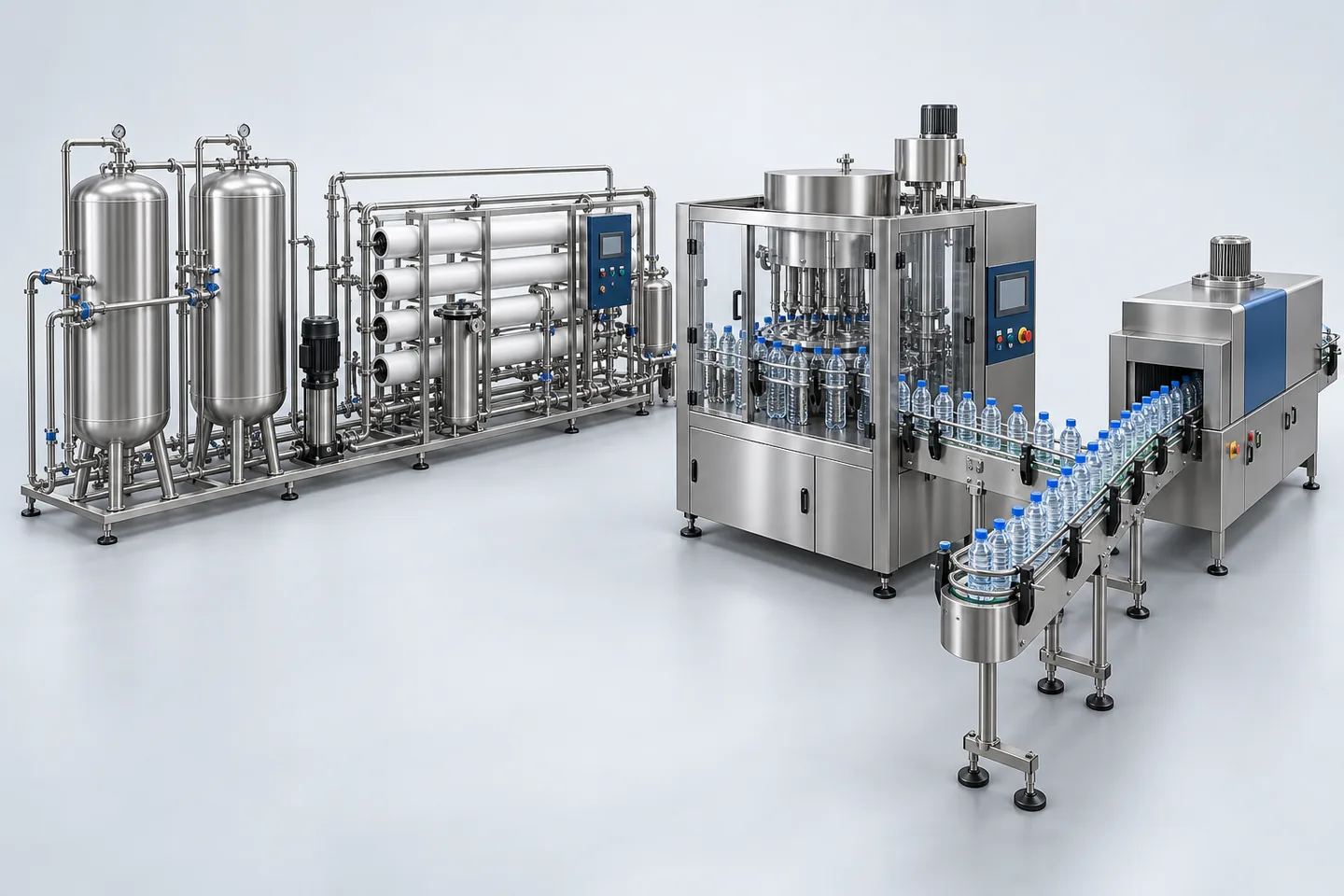
30 BPM
30 BPM Mineral Water Bottling Plant
Compact 30 BPM turnkey plant for new entrants
Output
1,800 bottles/hour
Power
25–30 kW
Price on Request · quoted to your spec
30 to 400+ BPM · automatic & semi-automatic · BIS IS 14543 documentation included
India's most-installed mineral water plant range, from 30 BPM startup units to 480 BPM industrial mega plants, plus dedicated 20L jar and glass-bottle lines.
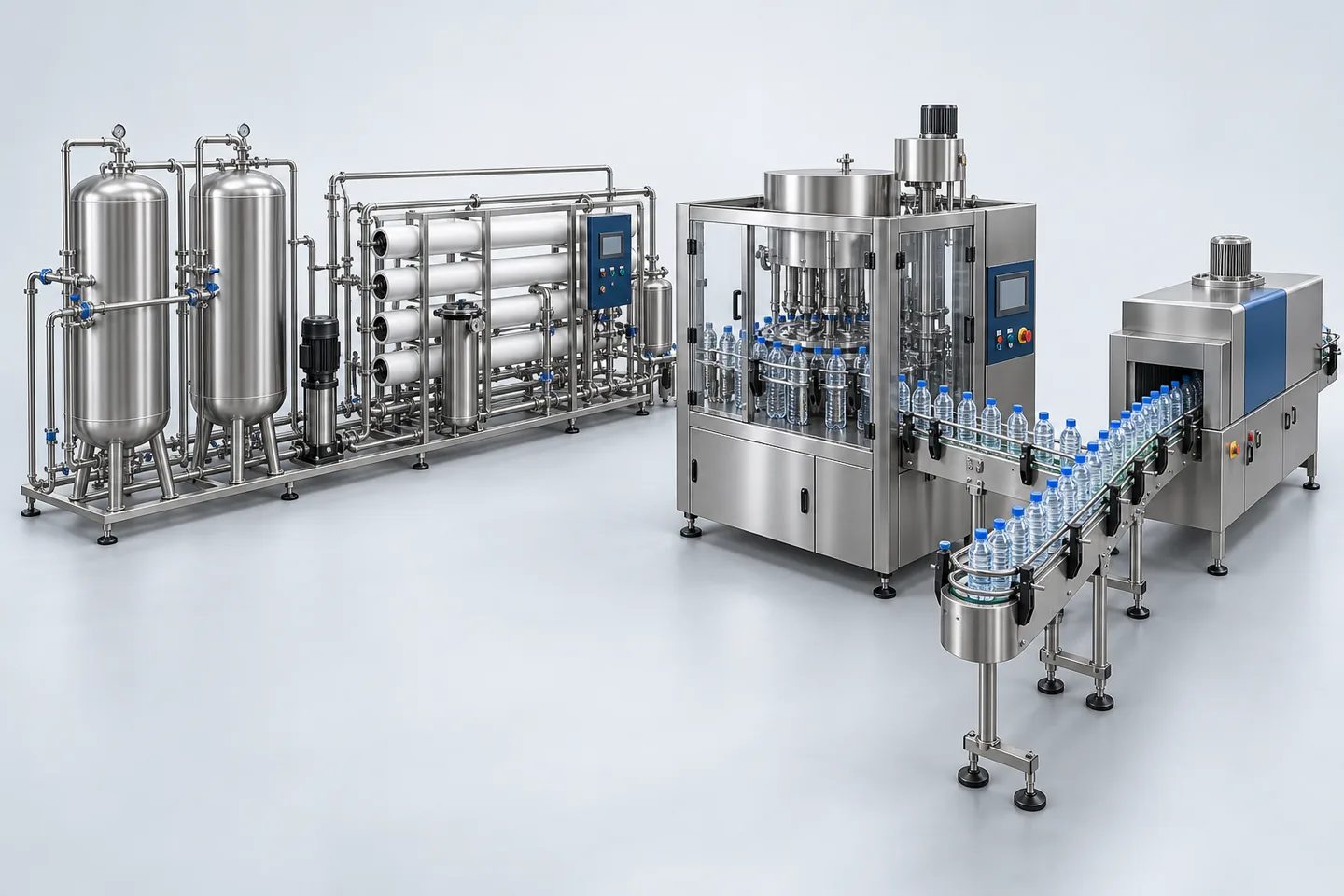
Each product page includes the spec sheet, scope of supply, and a direct line to our engineering team. Everything here is priced on request.
Sized by bottles-per-minute, from a 12 BPM semi-automatic starter line to a 480 BPM twin-monoblock mega plant.
Compact 30 BPM turnkey plant for new entrants
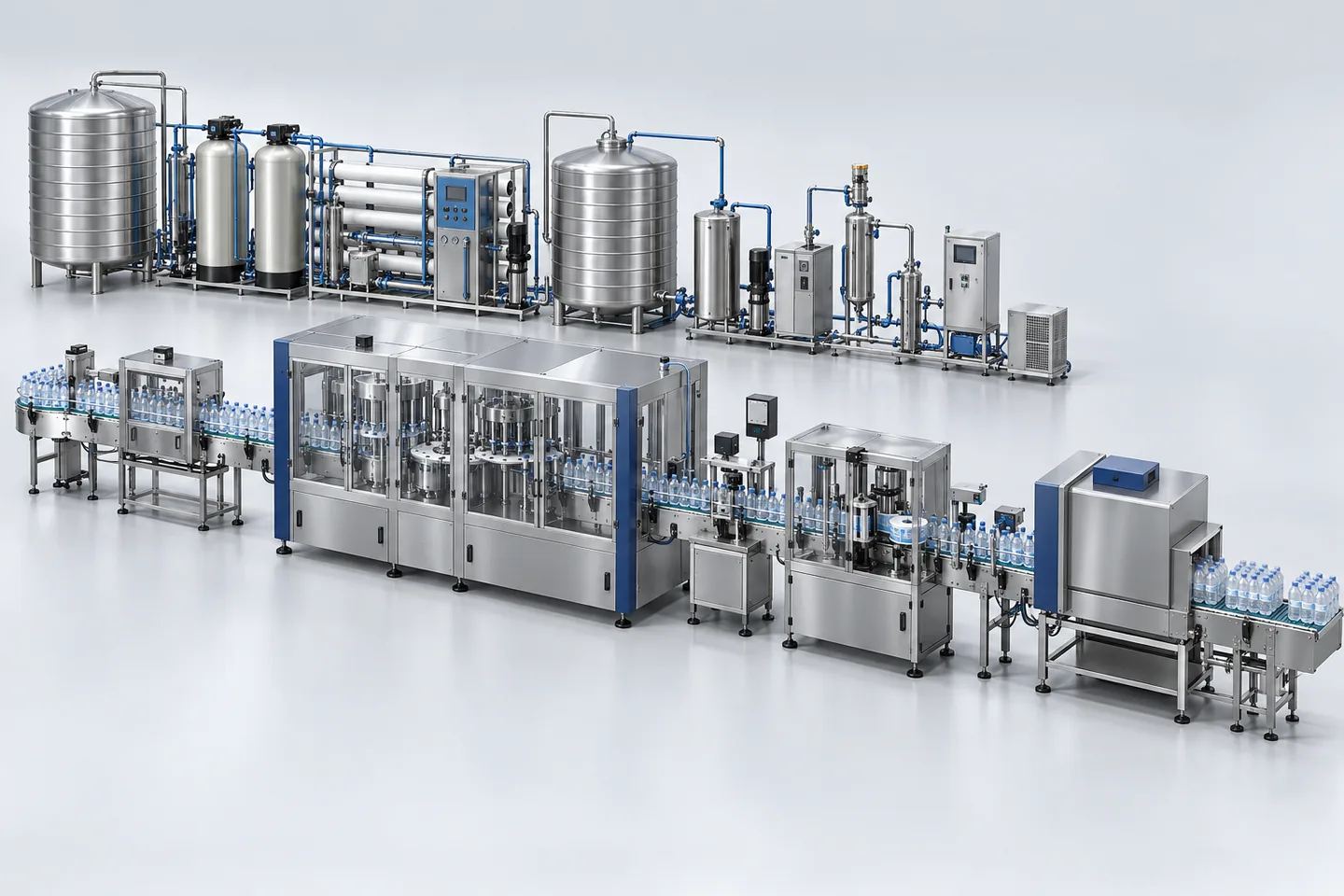
60 BPM, India's most-installed configuration
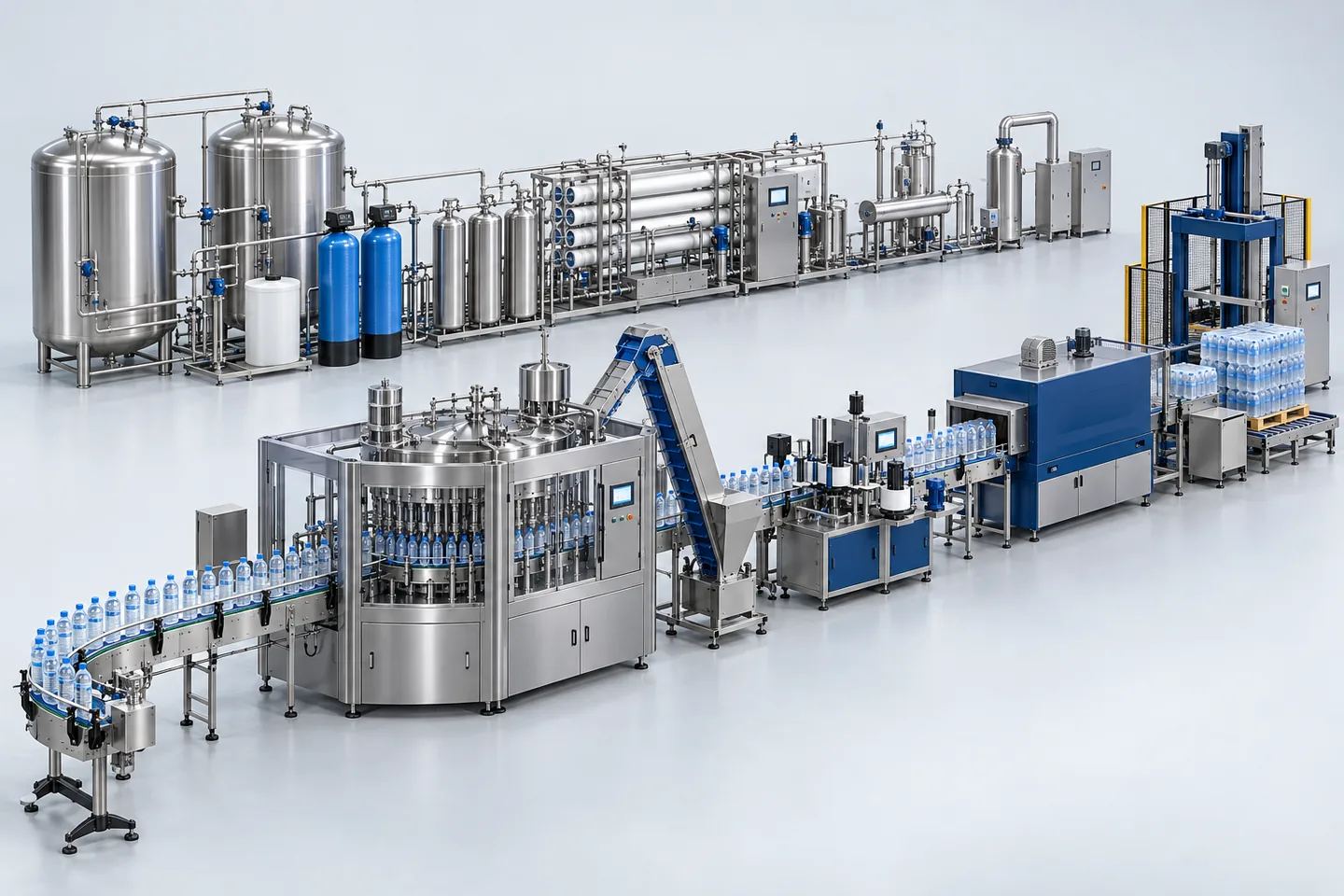
90 BPM, the upgrade for fast-growing brands
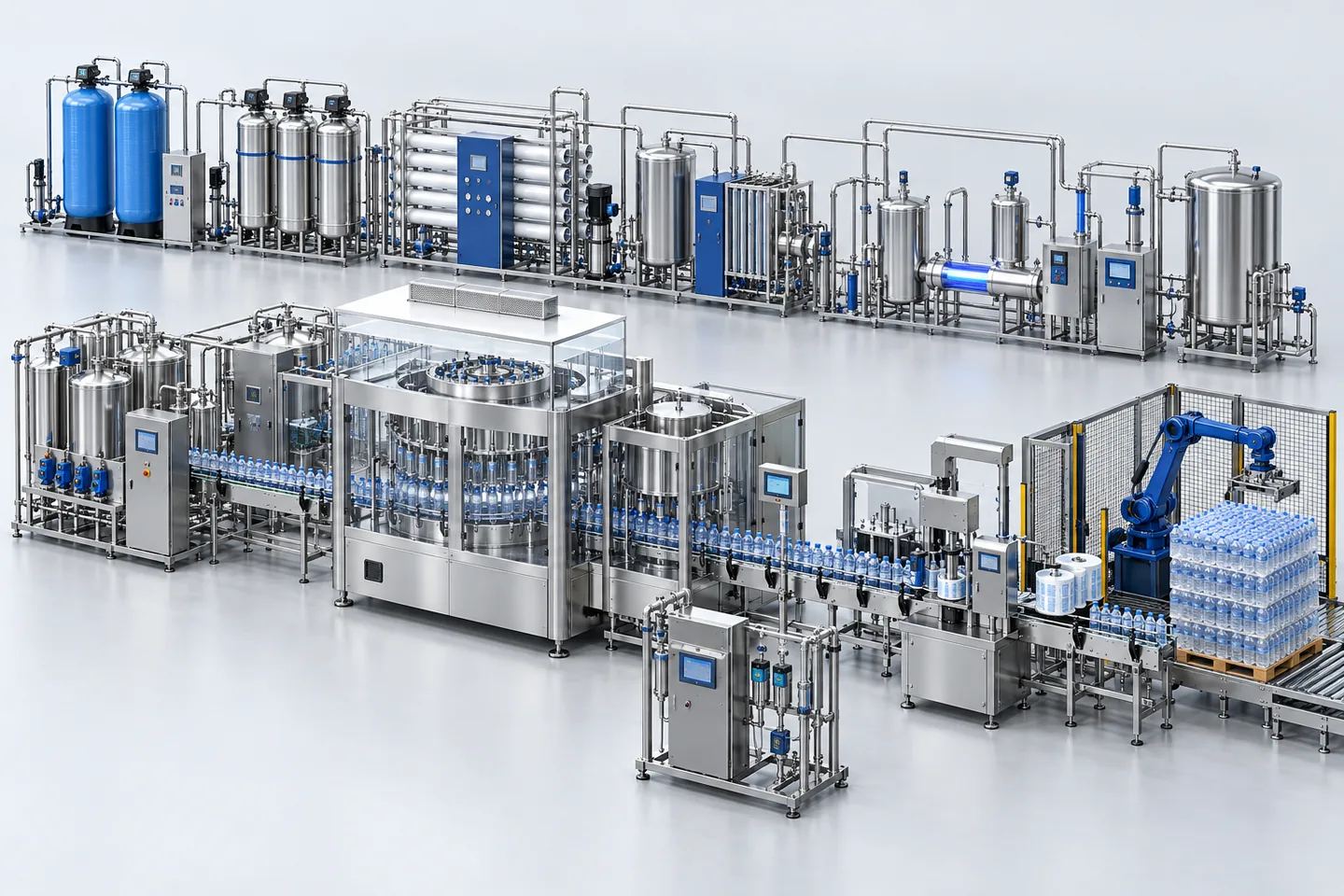
120 BPM, industrial throughput, brand-grade hygiene
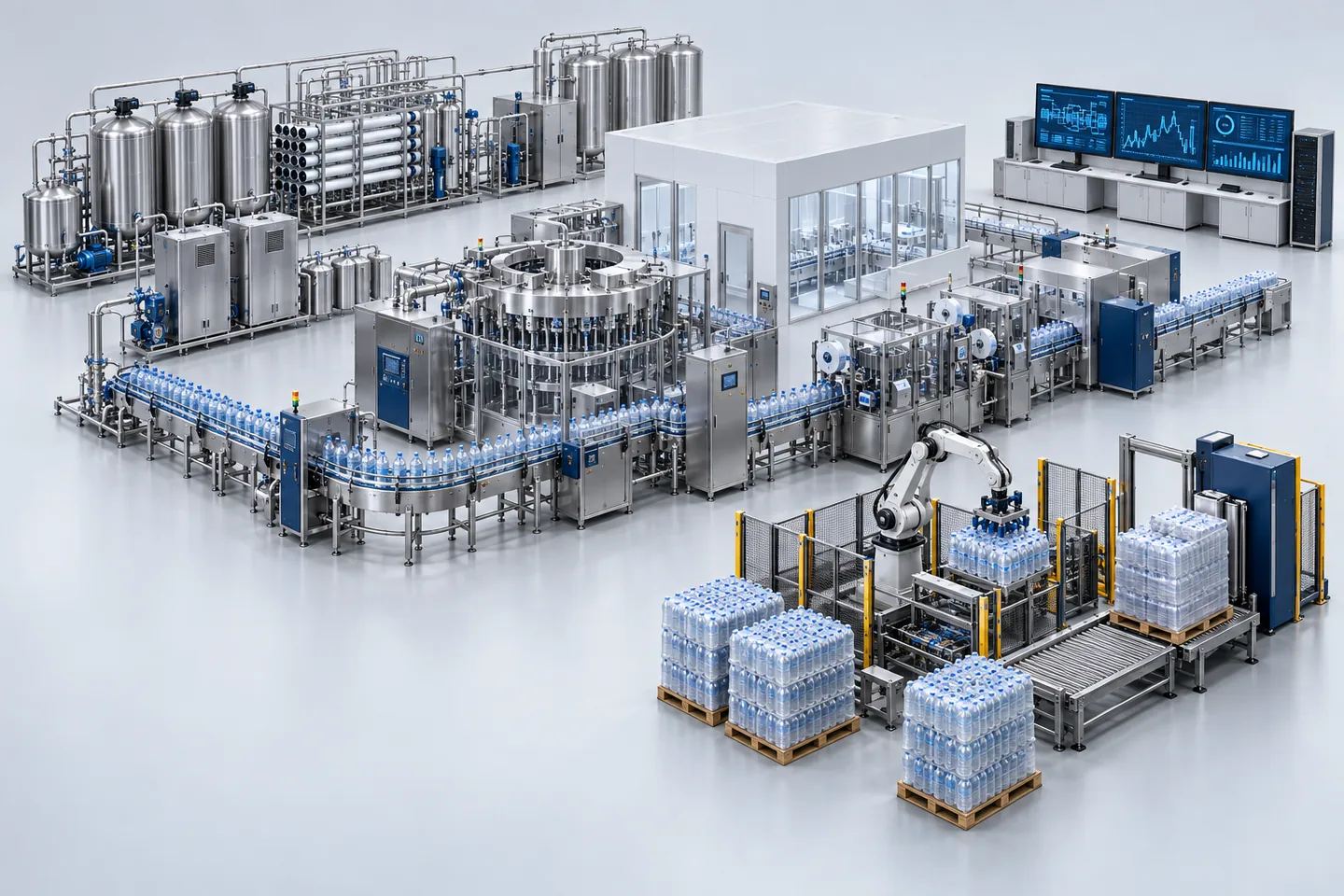
240 BPM, flagship industrial plant
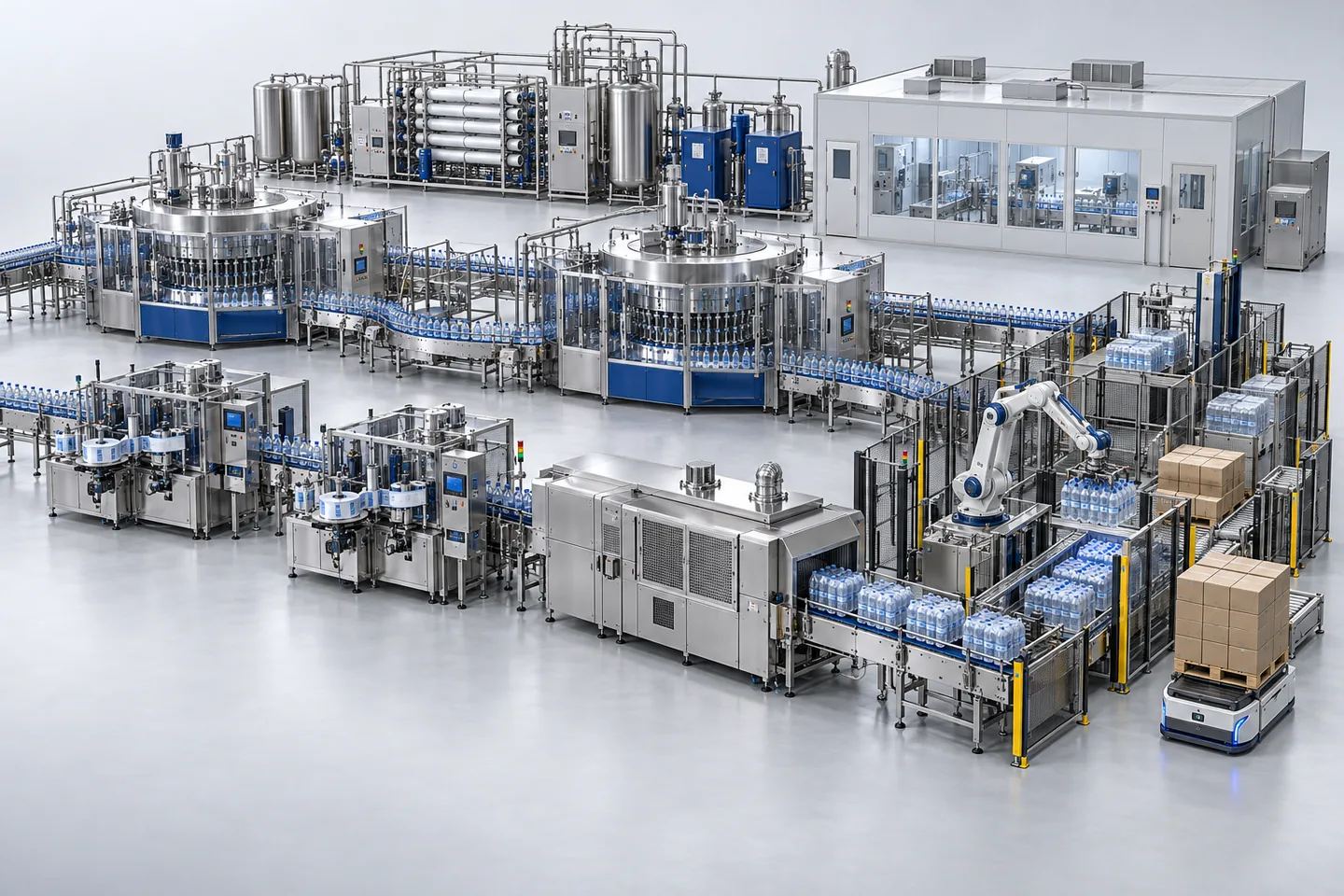
480 BPM, mega plant for national & multi-line co-packing
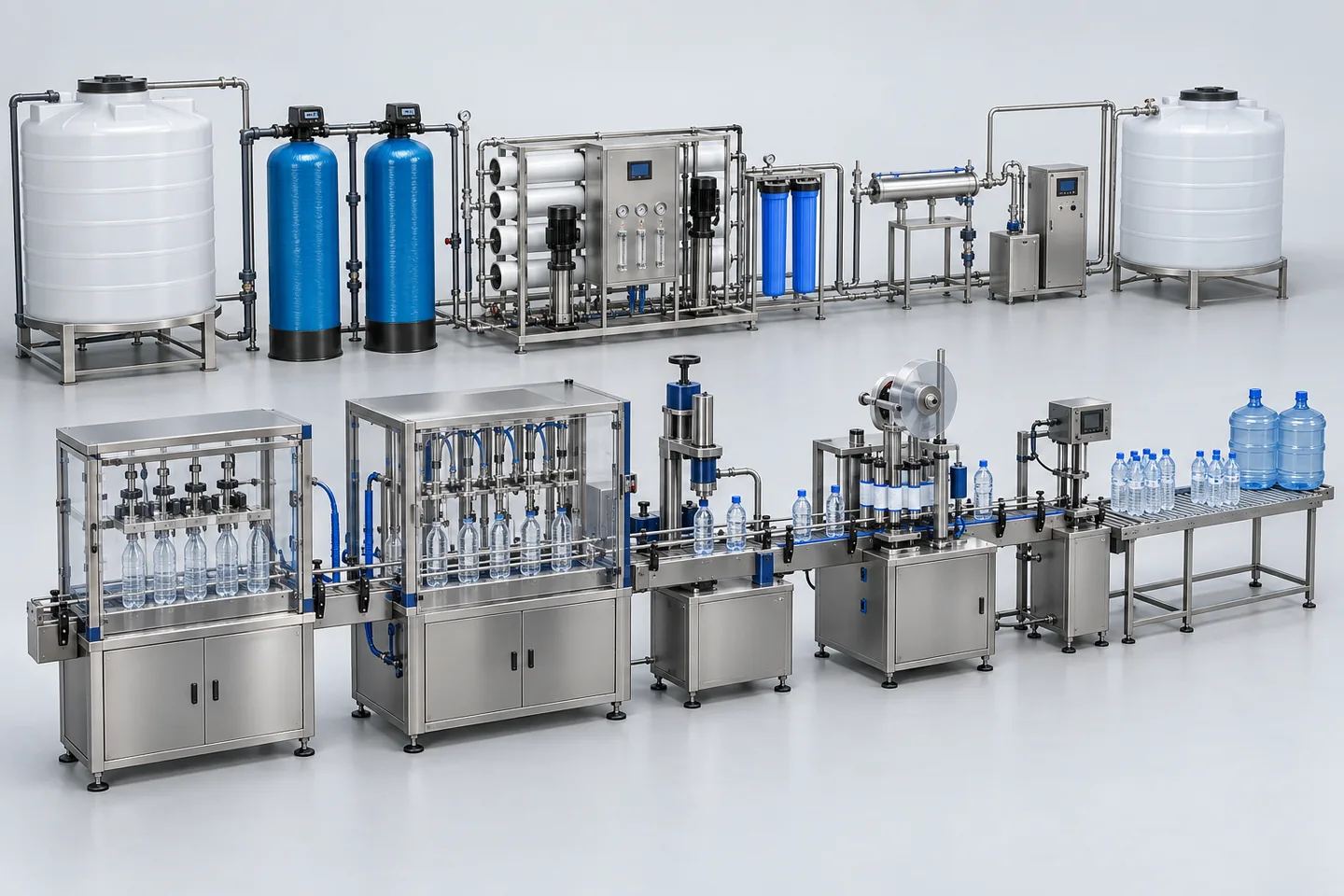
Lowest-capex entry into packaged drinking water
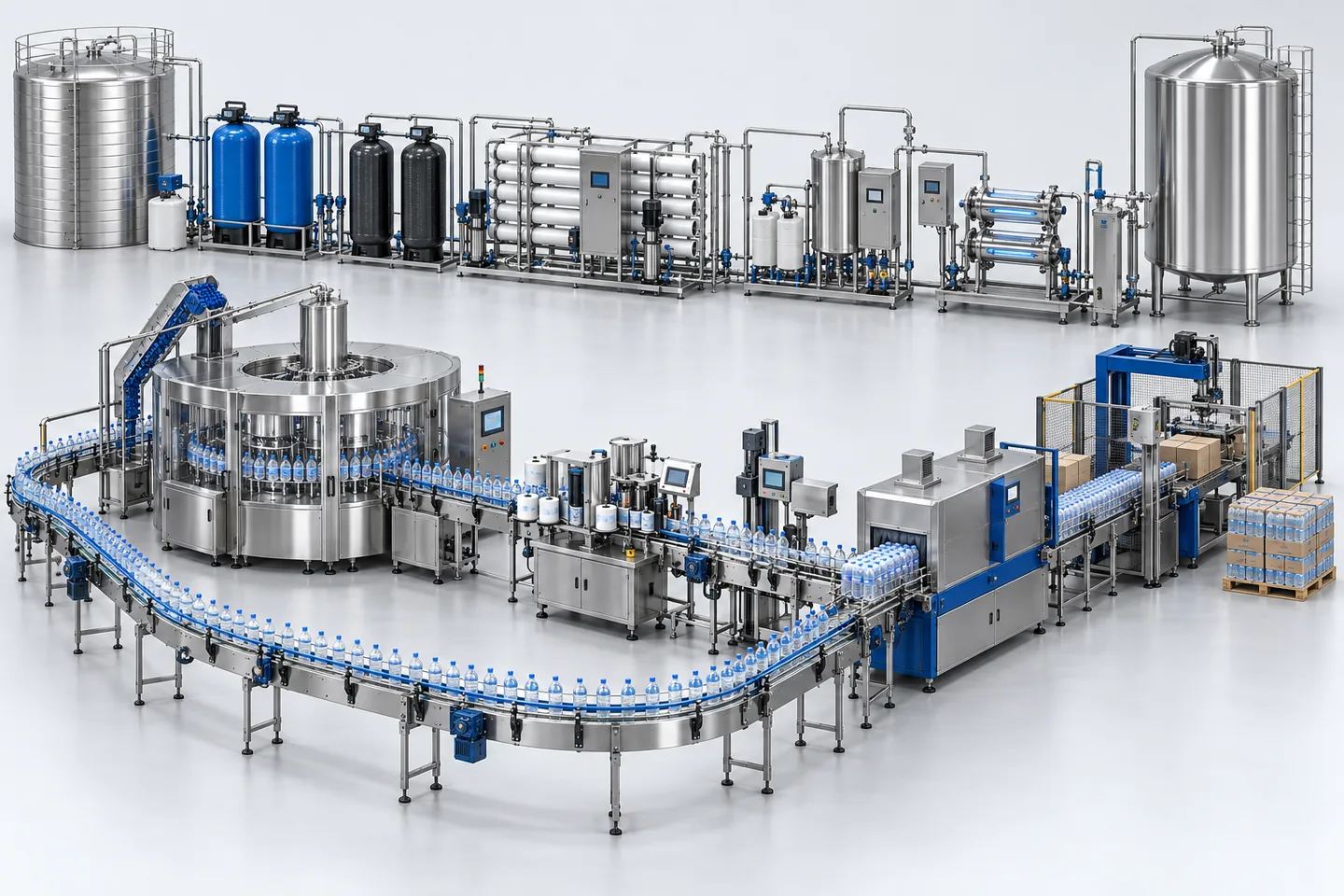
The step between a regional and a national line
Dedicated 20-litre jar washing, filling and capping lines for home-and-office-delivery water brands.
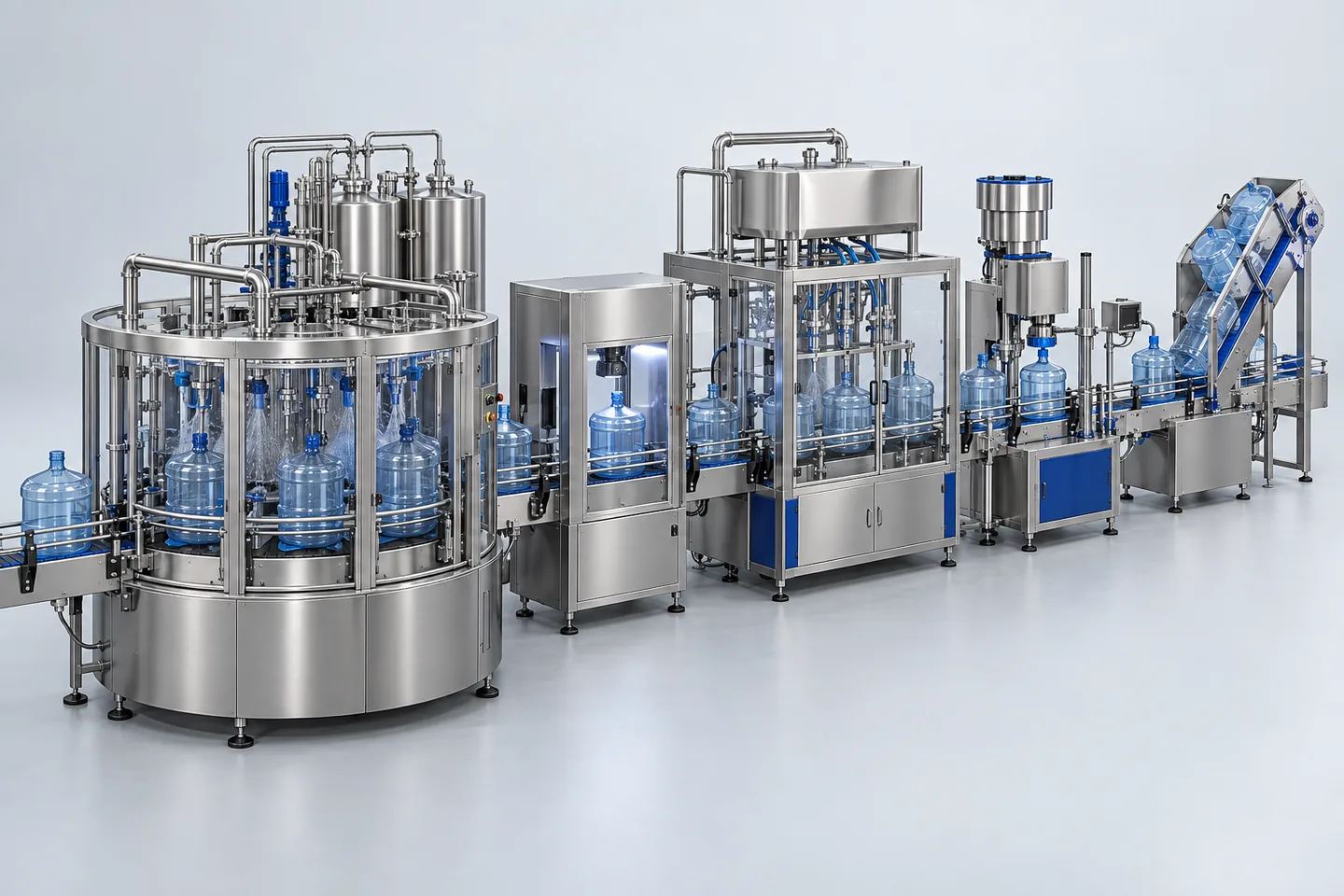
Dedicated 20L HOD jar filling plant
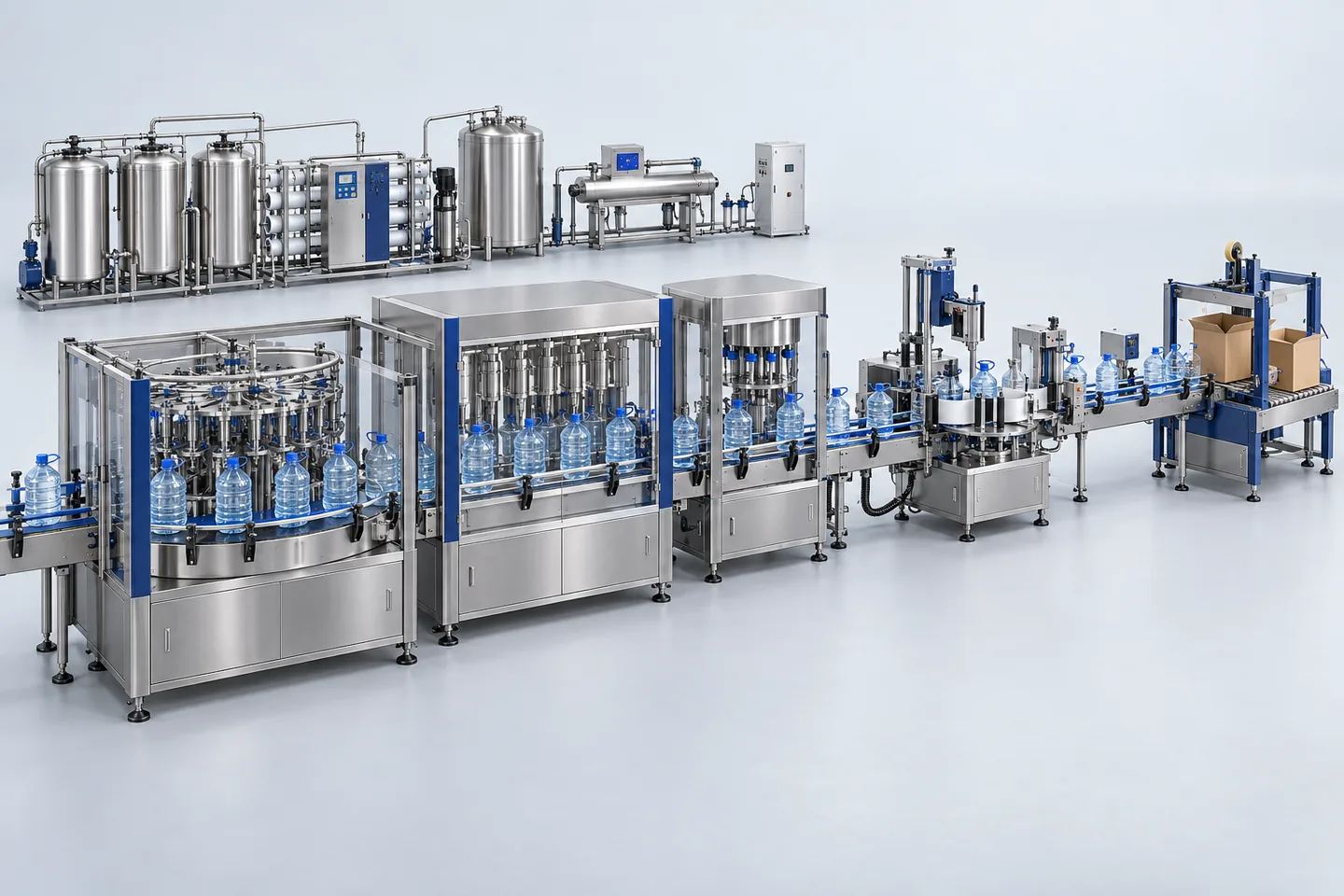
The fastest-growing pack size in Indian retail water
Premium water formats — alkaline, copper-infused, natural spring, flavoured and vitamin water.
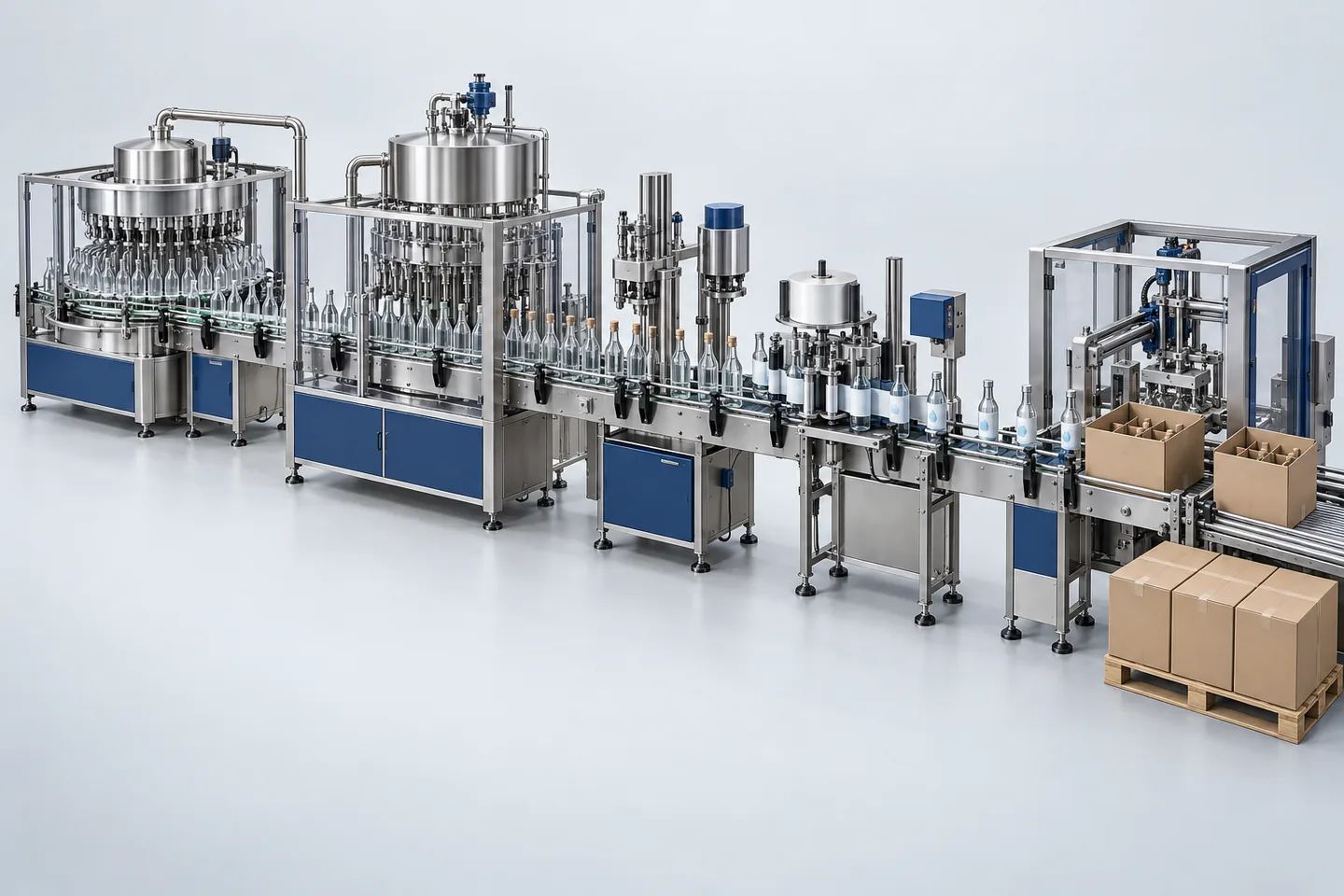
Premium glass-bottle bottling for HORECA & gifting
pH 8.5–9.5 alkaline water, produced repeatably
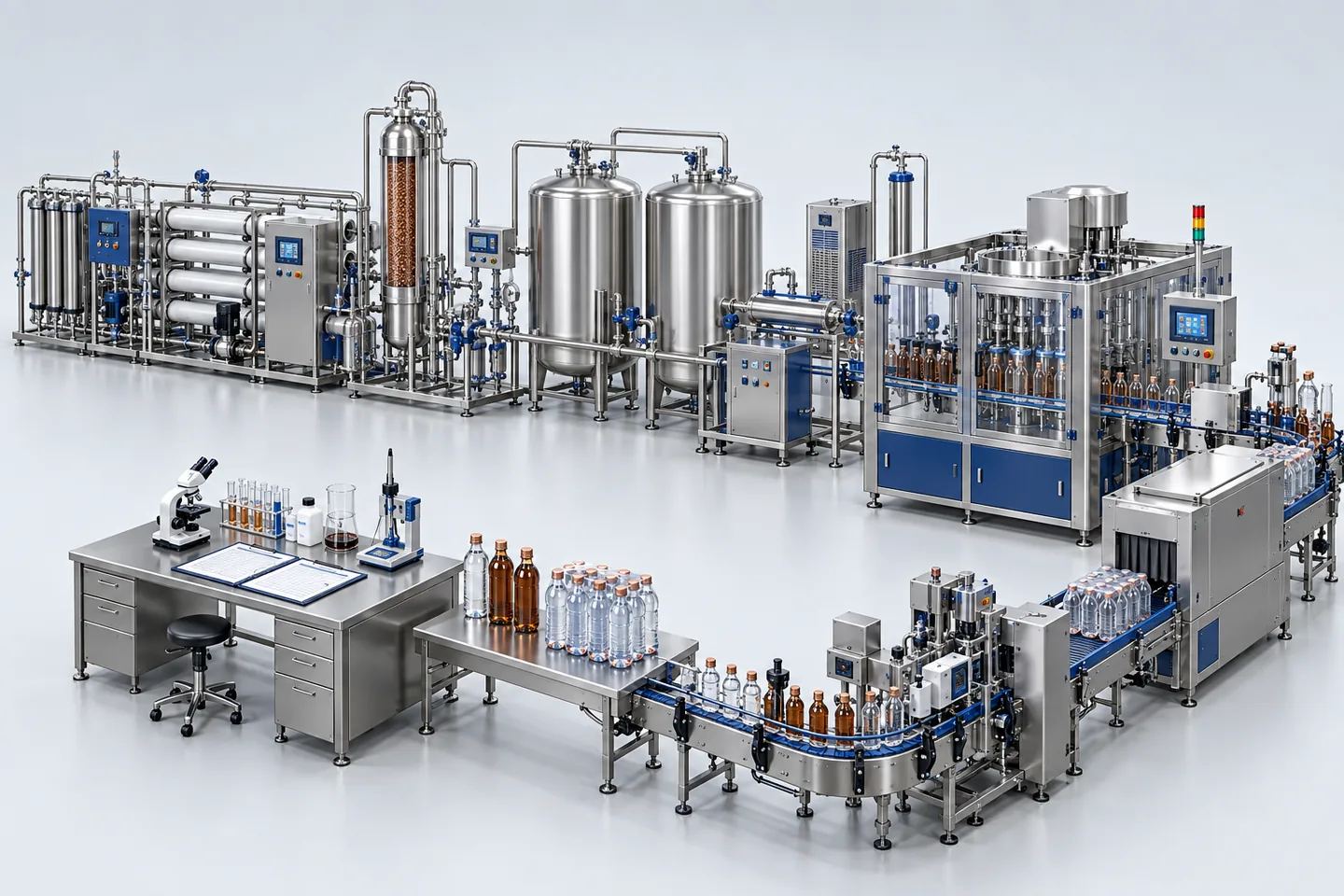
Tamra jal, produced to a controlled copper ppm
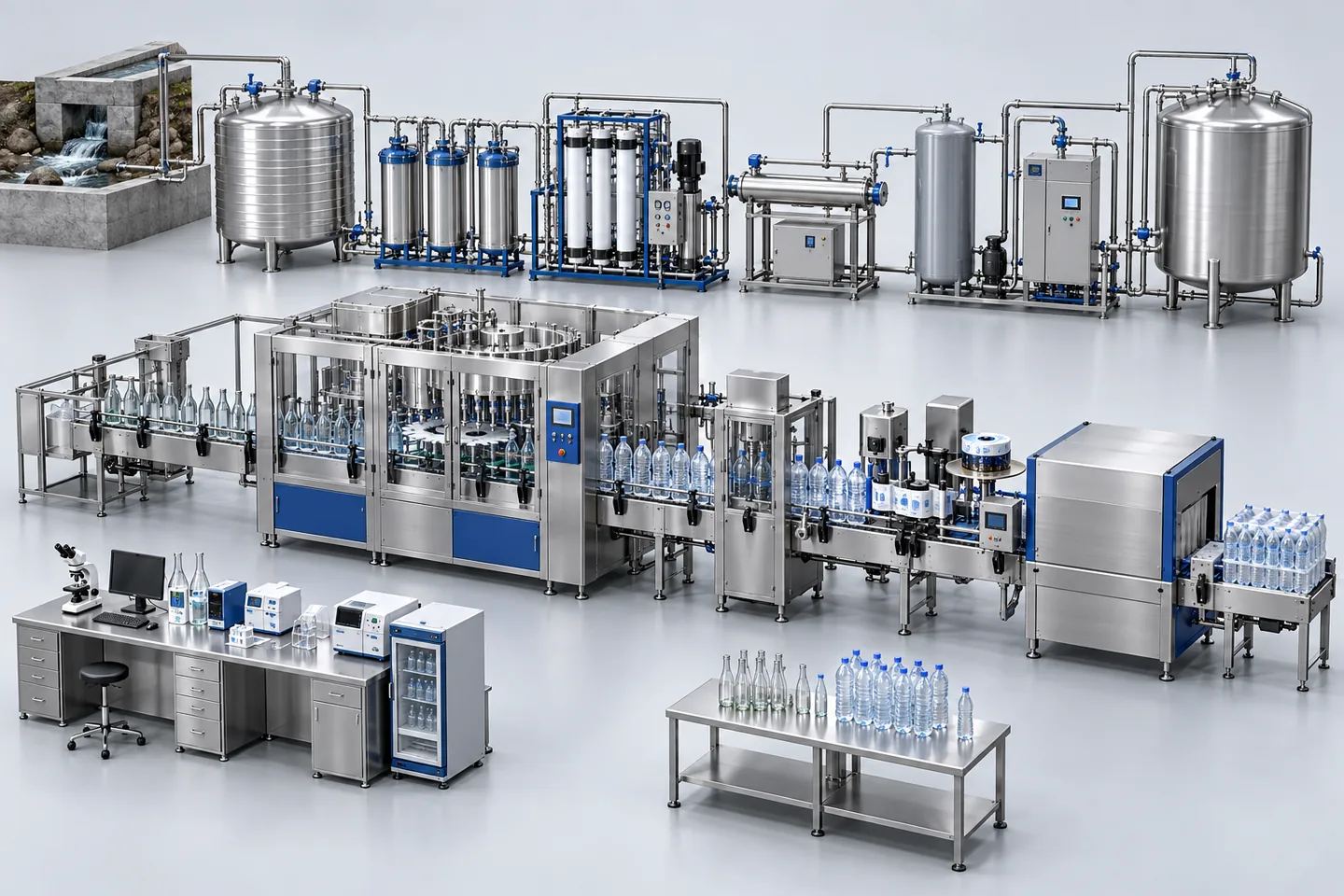
Spring-sourced water, bottled under IS 13428
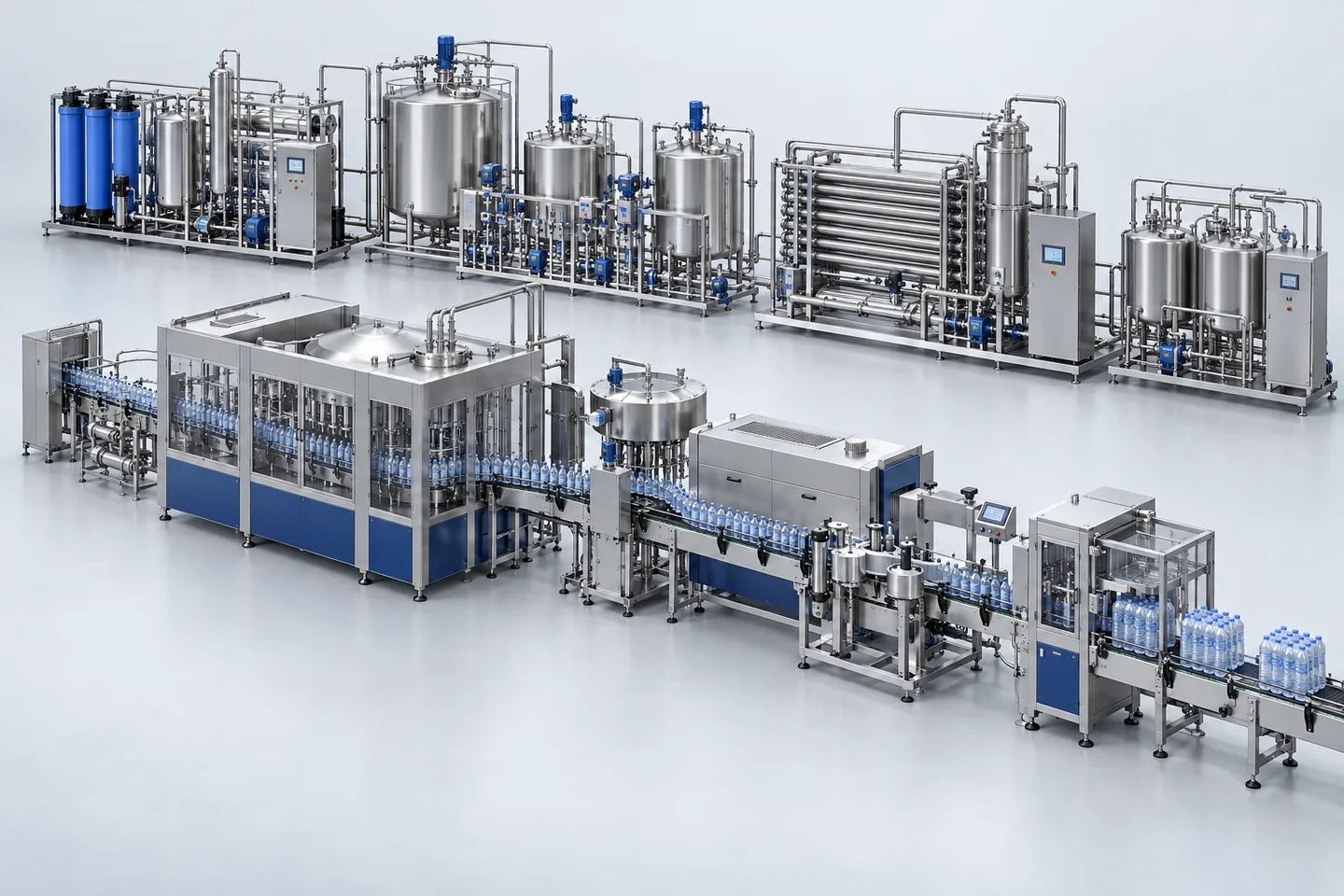
Still flavoured water, hot-fill or cold-aseptic
Skid-mounted, containerised and captive plants for hotels, hospitals, campuses and remote sites.
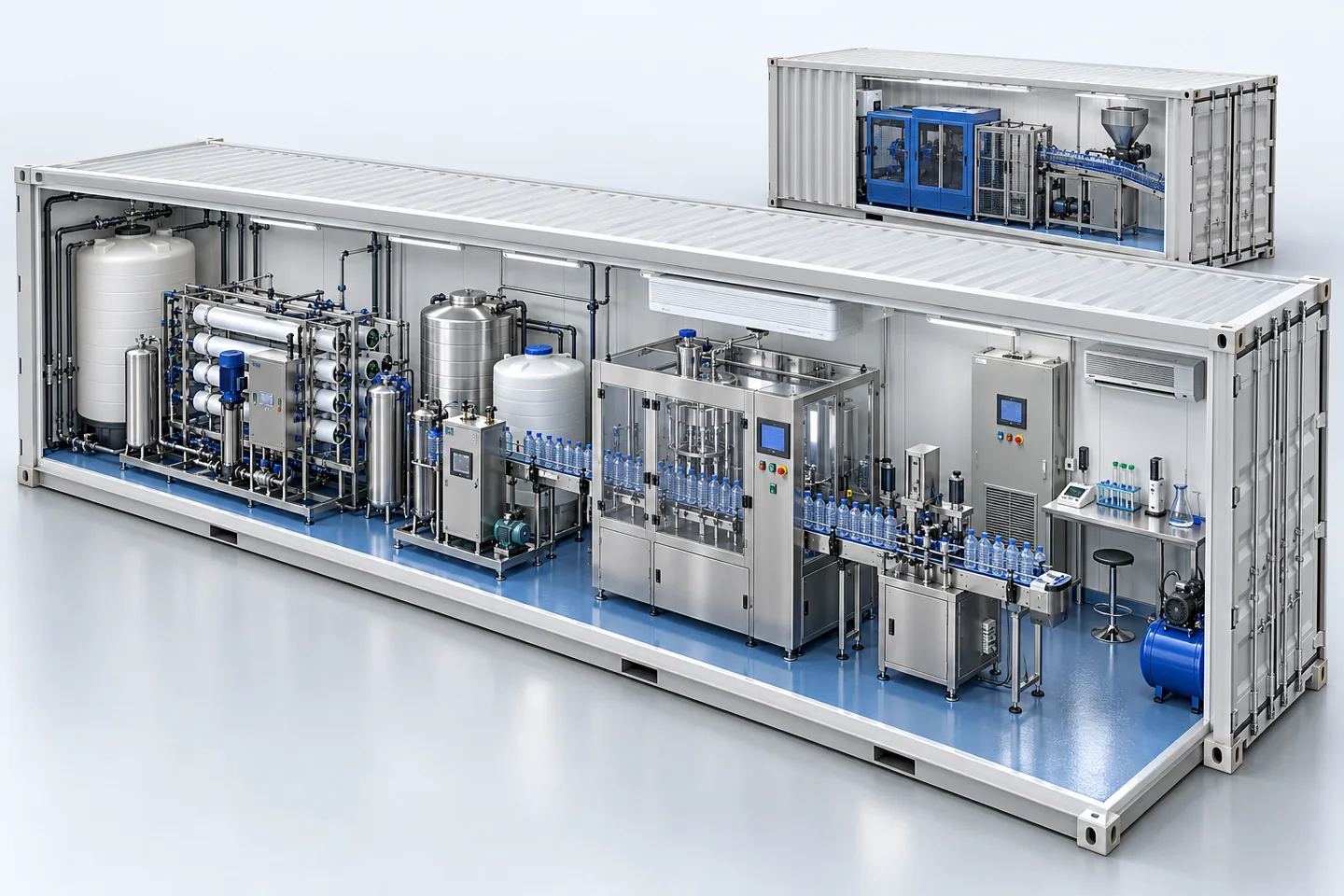
A complete bottling plant inside a shipping container
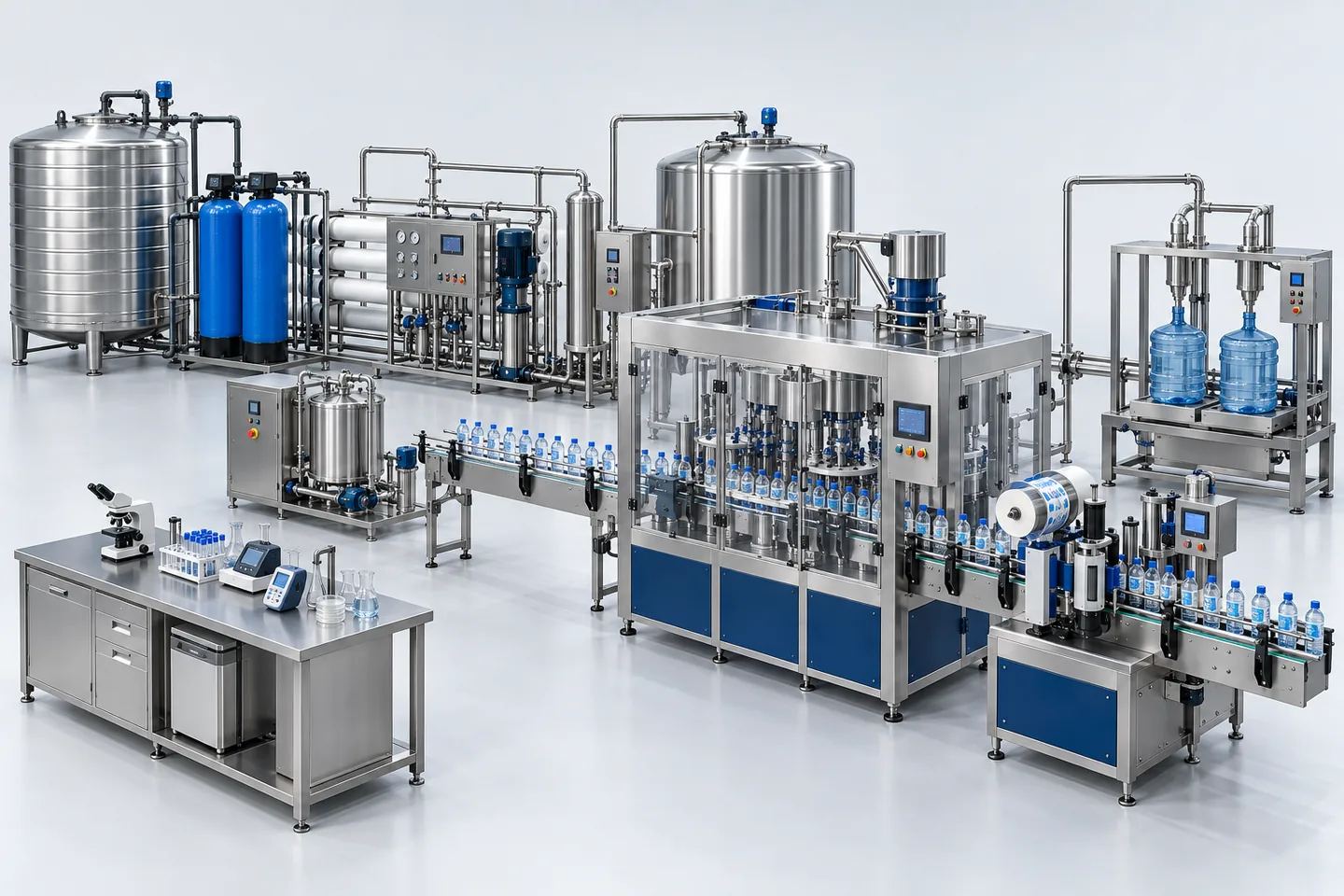
Bottle your own water instead of buying it
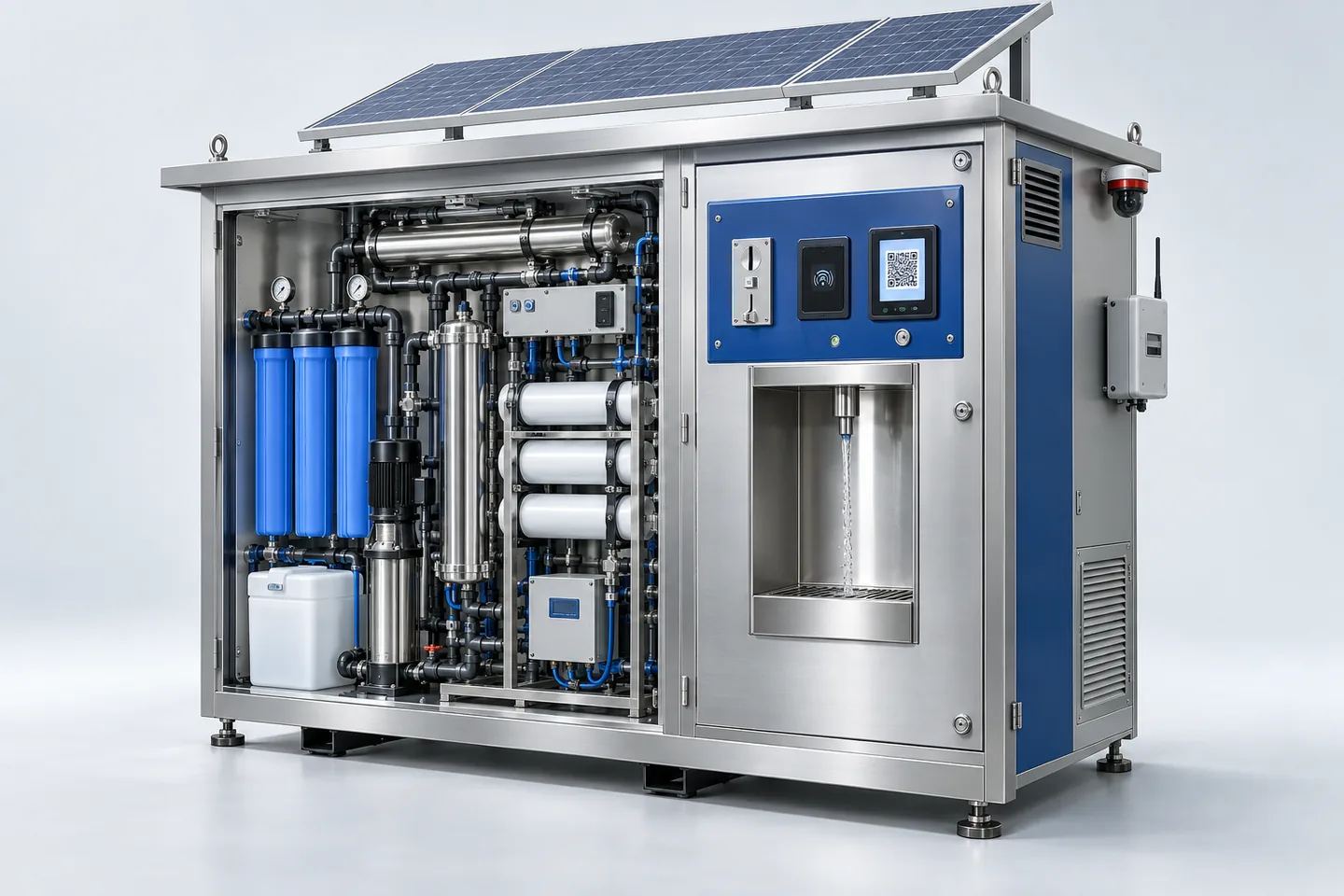
Coin, card and UPI-operated community water dispensing
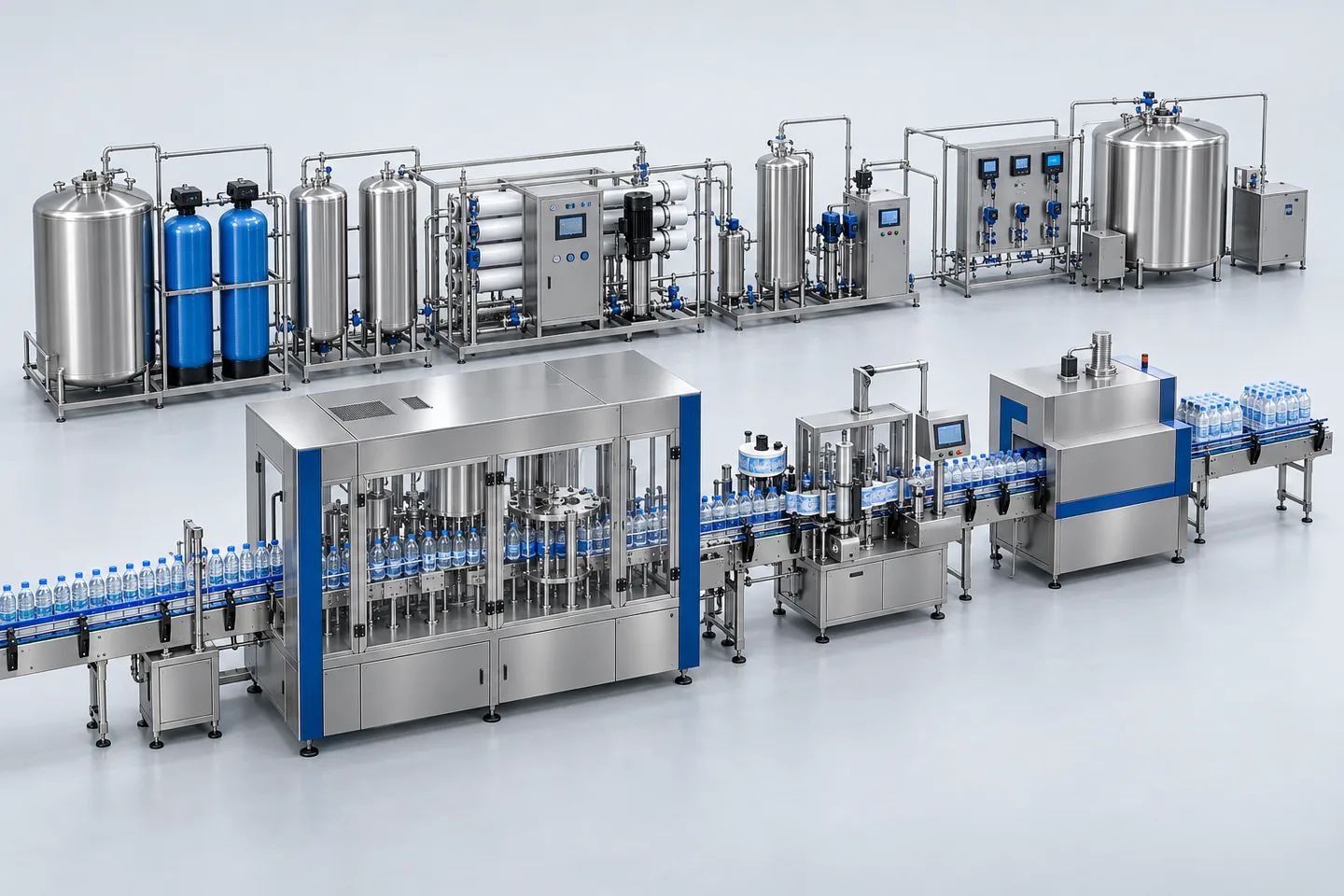
Buffered storage with hardness reduction where required.
Removes turbidity, silt, and suspended solids.
Removes chlorine, organic matter, and odour compounds.
95–99% TDS rejection. Twin-pass for high-TDS feed.
254 nm UV for microbial inactivation post-RO.
Final disinfection at 0.2–0.4 ppm residual at the fill point.
Food-grade SS-304 storage, ozone-pressurised.
Synchronised rinsing-filling-capping in one frame.
Labelling, coding, shrink wrapping, palletising.
Itemised proposal, plant layout, and a BIS / FSSAI checklist in 24 hours.
Every plant is quoted against your capacity, feedwater analysis, plot and product mix. Send us those and you get an itemised proposal within 24 hours.
Have a question we haven't covered? Talk to our team on WhatsApp or call us directly.
Quote, plant layout, BIS / FSSAI checklist in 24 hours.