Built for the way your line actually runs.
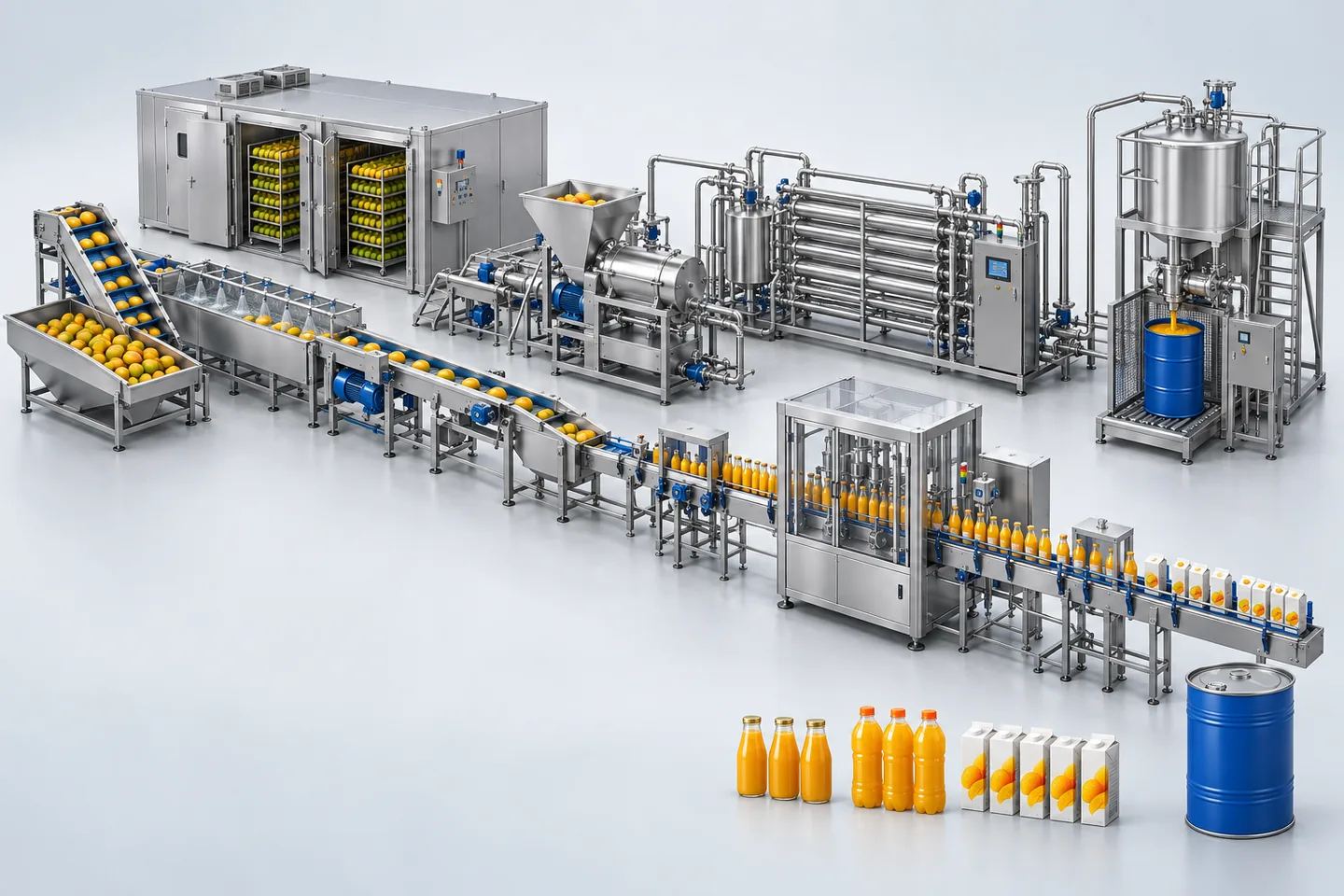
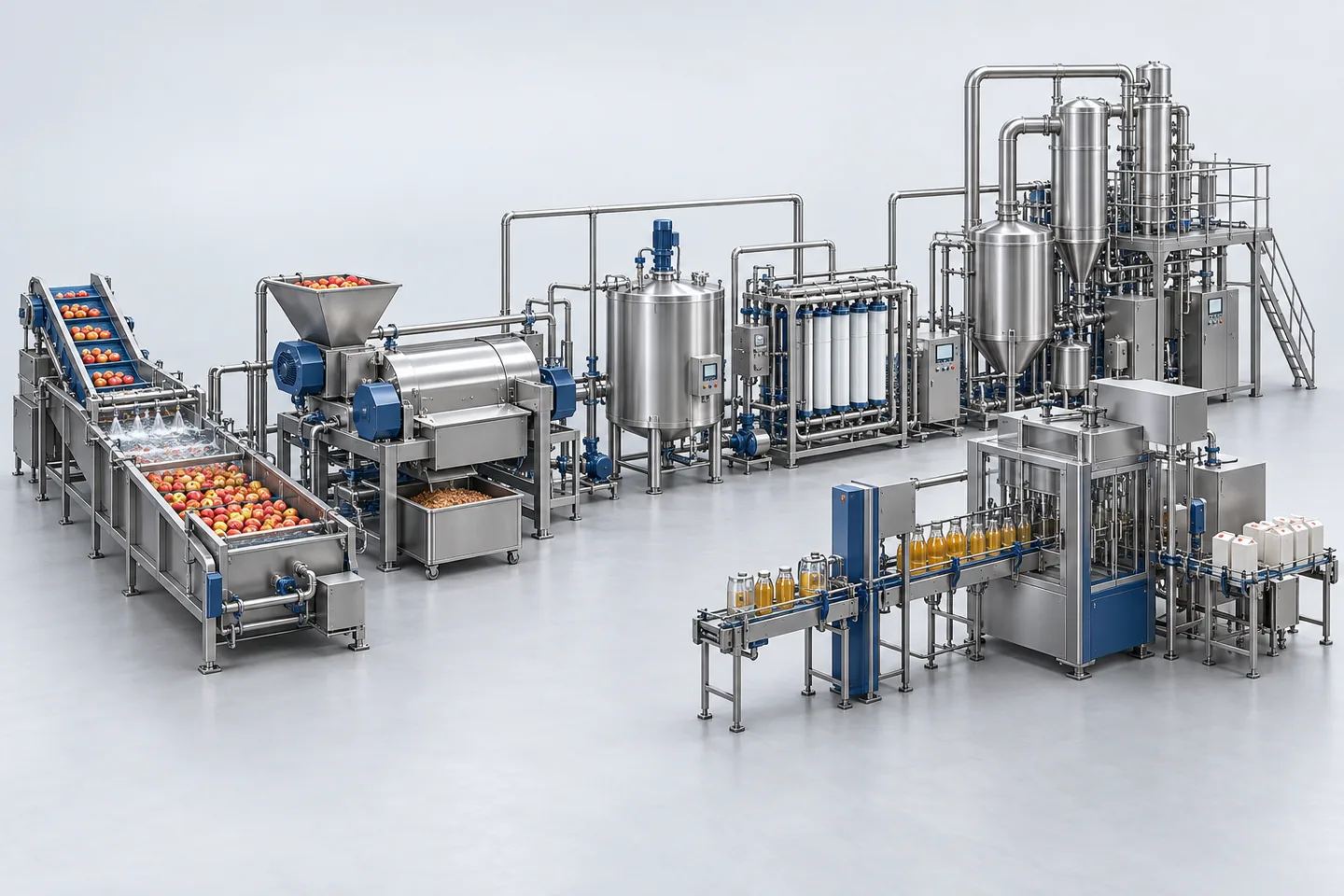
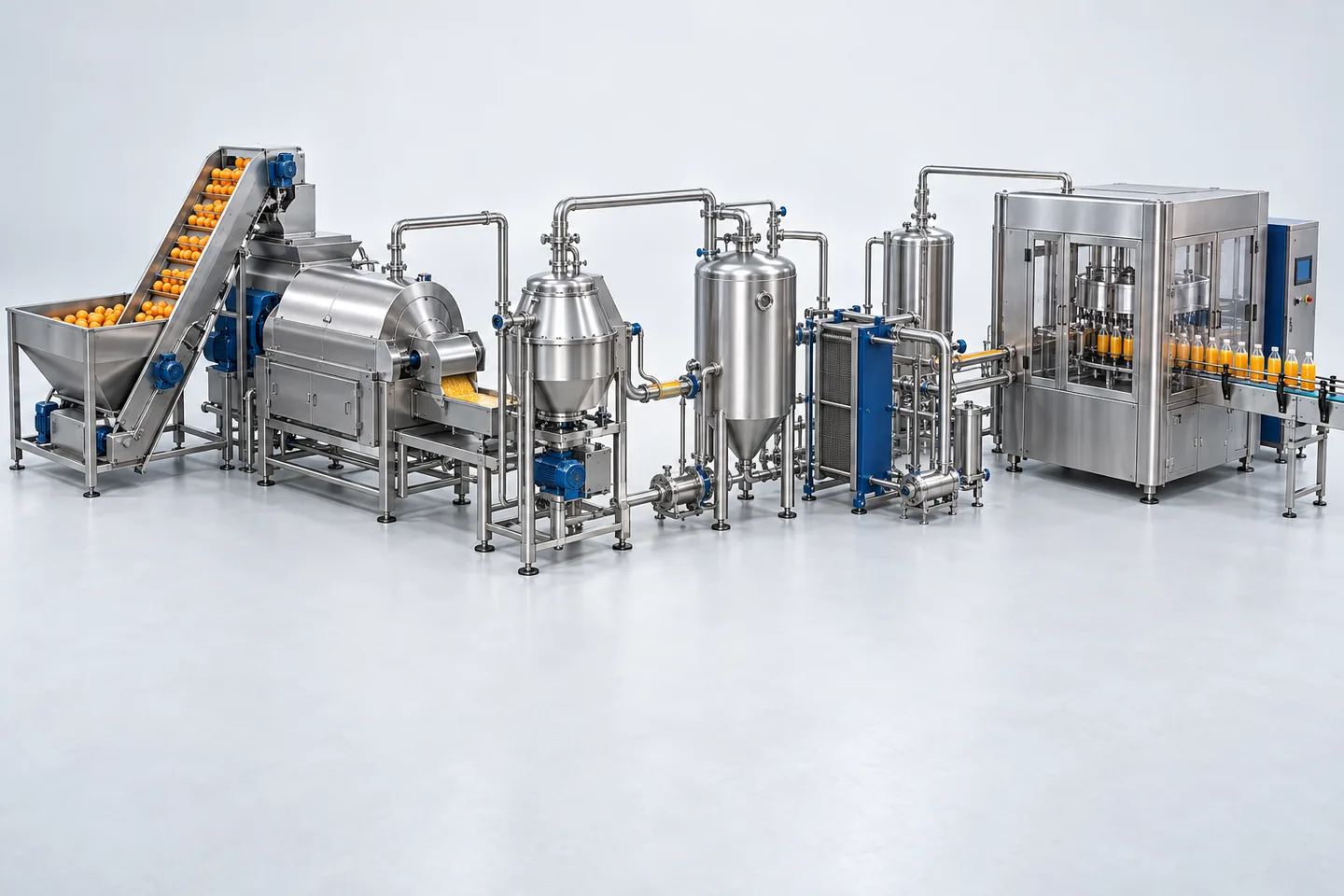
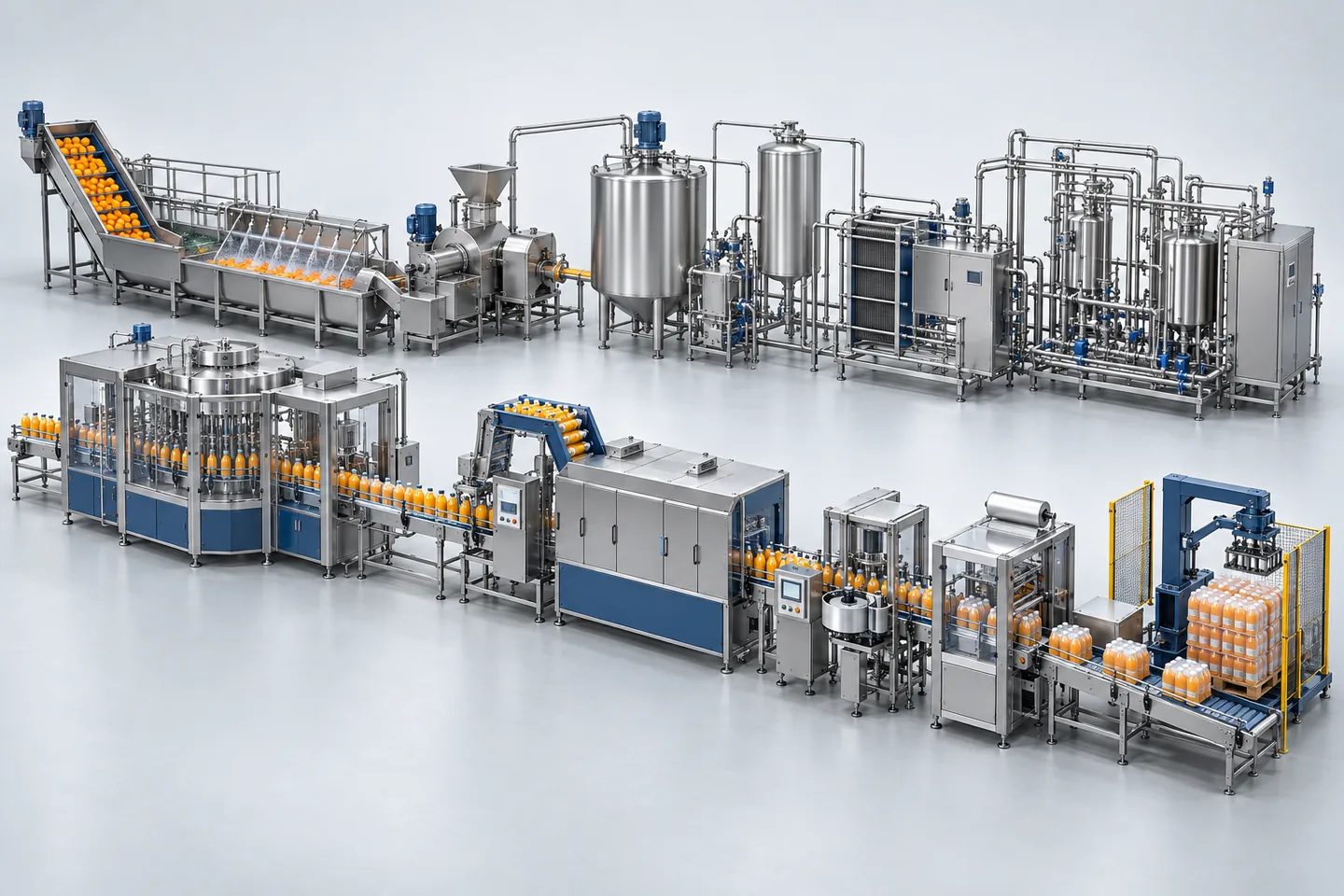
A complete juice processing line covering raw fruit handling, pulp extraction, blending, pasteurisation, hot-fill bottling, and packaging. Capacities from 60 BPM to 240 BPM.
Supports nectar, RTS (Ready to Serve), 100% juice, and pulpy / fortified juice. Includes a CIP / SIP skid, deaerator, plate heat exchanger pasteuriser, and hot-fill or aseptic-fill option. Compatible with PET, glass, and tetra-pak packaging.
Who this configuration suits.
Get a detailed quote for the Turnkey Juice Plant.
Layout drawing, utility schedule, BIS / FSSAI checklist, itemised quotation in 24 hours.
Everything we ship with this plant.
Standard turnkey scope. Optional add-ons quoted on request.
Specs at a glance.
| Output (PET hot-fill) | 60–240 BPM |
| Pasteurisation | 92–96°C / 25–30 sec |
| Power load | 55 – 280 kW |
What does a turnkey juice plant cost?
A Turnkey Juice Processing & Bottling Plant costs ₹1.1–3.5 crore turnkey in India as an indicative range. Final pricing depends on your feedwater analysis, whether the scope is turnkey or machinery-only, your SKU mix and the utilities already on site.
Indicative market range for a turnkey line, not a quotation. The figure moves with feedwater quality, whether the scope is machinery-only or turnkey, how many SKUs you run and what utilities already exist on site.
Output, degree of automation and whether you need redundancy on critical stations.
A high-TDS, iron-heavy or seasonal input changes the treatment train and its cost materially.
Machinery only, or turnkey with civil drawings, utilities, commissioning and BIS / FSSAI documentation.
Number of SKUs, bottle sizes and how fast you need to switch between them.
Common questions.
Hot-fill or aseptic-fill, which is better for an Indian juice brand?+
Hot-fill (~88°C bottle entry) is cost-effective for new brands. Aseptic is required when shelf-life > 6 months without preservatives is needed (typically premium preservative-free positioning).
Industry terms used here.
A controlled heat-treatment process that inactivates pathogens and spoilage organisms in beverages, typically 72–95°C for juice, 136–142°C UHT for aseptic.
An automated cleaning protocol where cleaning solutions are circulated through process equipment without disassembly.
A food-safety management system that identifies, evaluates, and controls hazards across processing, required for HORECA, institutional and export contracts.