Setting Up a Sugarcane Juice Plant in the UP Cane Belt: What It Actually Takes
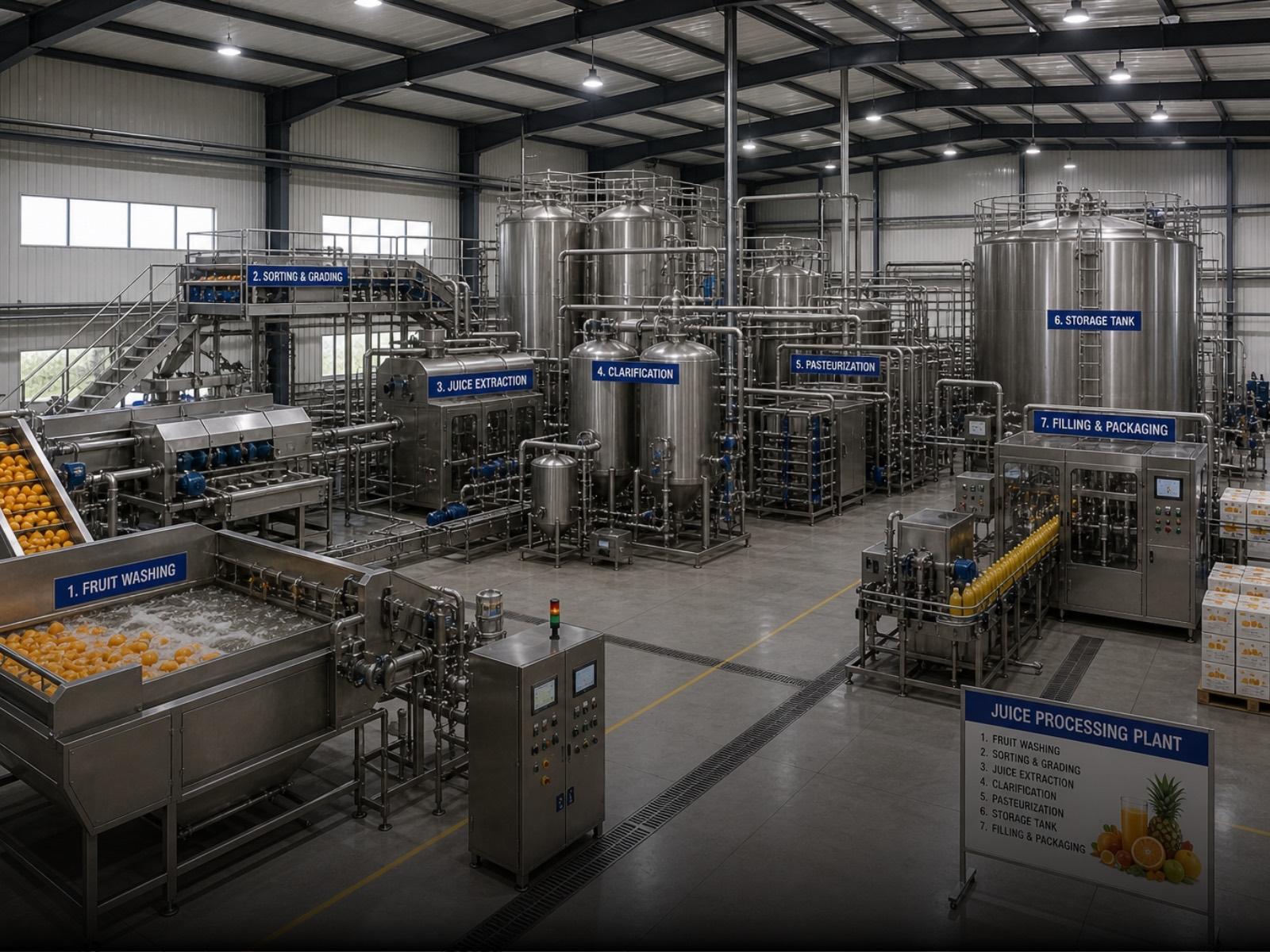
Western UP crushes more sugarcane than most countries grow. Muzaffarnagar, Meerut, Saharanpur, Bijnor and Shamli sit on a belt with cane availability, existing crushing infrastructure and a farming economy already organised around the crop.
So the obvious question comes up constantly: why is there so little packaged sugarcane juice on the shelf?
The answer is that sugarcane juice is the hardest common Indian juice to package, and most people who try it discover why only after they have bought the machinery.
The five-minute problem
Freshly crushed cane juice starts degrading almost immediately. Three things happen at once:
Enzymatic browning. Polyphenol oxidase in the cane reacts with oxygen within minutes. This is the same reaction that turns a cut apple brown, and it moves fast. Once browning has started it cannot be reversed — pasteurising later locks the colour in rather than fixing it. Grey packaged sugarcane juice is browning that was already complete before the product ever reached the steriliser.
Fermentation. Cane juice is roughly 15–20 °Bx of readily fermentable sugar at ambient temperature. Wild yeast is already present on the cane. Left unchilled, fermentation is measurable within the hour.
Suspended solids. Crushing releases fibre, mud and bagasse fines. These foul heat exchangers, block filters and settle out in the bottle.
All three are controlled the same way: get the juice cold, fast, and deactivate the enzyme before anything else happens. The design target is crush-to-below-5°C in under five minutes. That single number drives the entire plant layout — the chiller sits physically adjacent to the mill, not across the shed.
What the line actually needs
| Stage | Purpose | Skipping it costs you |
|---|---|---|
| Cane washing & de-topping | Removes field soil, tops, leaves | Mud load fouls everything downstream |
| 3 or 5-roller mill | Extraction, 55–65% by cane weight | — |
| Rapid plate chiller | Below 5°C within minutes | Browning and fermentation |
| Enzyme deactivation | Short high-temperature hold | Grey product at 3 weeks |
| Decanter centrifuge | Fibre and mud removal | Sediment in the bottle |
| Polishing filtration | Bag + cartridge | Haze, filter blockage |
| Acidity / Brix correction | Lime, ginger, mint | Flat, one-note flavour |
| Pasteuriser | Microbiological safety | No shelf life |
| Hot-fill or aseptic filler | Ambient distribution | Cold-chain-only product |
Hot-fill gives 4–6 months and is where nearly everyone should start. Aseptic reaches 6–9 months and matters if you are targeting national distribution or export, but it roughly doubles the capex and demands operating discipline a first-time plant rarely has.
The seasonality problem nobody plans for
This is what actually kills sugarcane juice ventures, and it is commercial rather than technical.
Cane crushing in North India runs roughly November to April. That is five or six months. Your plant sits idle for the rest of the year while the loan repayment does not.
Four ways out, in rough order of how well they work:
- Run a second fruit in the off-season. The chiller, pasteuriser, filler and CIP are all shared. Mango (April–July) slots almost perfectly against the cane season, and western UP has mango belts within reach. This is the strongest answer and should be designed in from the start, not retrofitted.
- Make squash and sharbat. Same filling block, ambient shelf life, no cold chain, and the demand peaks in summer — exactly when cane stops.
- Buy cane from staggered geographies. Maharashtra and Karnataka crush on a different calendar. Freight makes this marginal for juice-grade cane, but it extends the window.
- Accept the campaign model. Run hard for five months, shut down, and size your financing for it. Sugar mills operate this way. It works, but only if the project report was honest about it — and most are not.
If your plan does not answer the off-season question explicitly, it is not a plan yet.
Cane sourcing in the belt
Juice cane is not the same purchase as mill cane. You want:
- Higher-juice, moderate-fibre varieties. Mills optimise for sucrose recovery; you want extractable juice and flavour.
- Short field-to-mill time. Cane starts losing quality once cut. Same-day delivery matters more than it does for a sugar mill, which is processing on a different timescale.
- A relationship, not a spot market. In a belt where mills set the rhythm, a small juice plant is a marginal buyer. Tie up supply with a cluster of growers or an FPO before you commission, or you will be bidding against a mill during peak crush.
FPOs are worth a serious look here. Several in western UP are actively seeking value-addition beyond raw cane supply, and the structure suits a juice plant — assured cane, shared risk, and access to agri-processing support schemes.
Regulatory notes specific to this product
- FSSAI licensing under the relevant beverage product standard, not BIS packaged water.
- Effluent is a real consideration. Cane washing and CIP generate a meaningful organic load. Get your pollution board consent scoped early; this is not a formality in a belt already dense with mill effluent.
- Bagasse is an asset, not a waste. It has a market as fuel and board feedstock. Plan its handling and sale rather than paying to dispose of it.
- If you are declaring "no added sugar" or "100% natural", make sure your acidity correction and any additives are consistent with that claim.
What it costs
We do not publish plant prices, for a reason that applies here more than most: a sugarcane line quoted without knowing your cane throughput, whether you are hot-filling or going aseptic, and whether you need mango capability in the same shed is a number that will be wrong. The variables genuinely dominate.
What we will tell you free, before any commercial discussion: whether your site, cane access and off-season plan actually support the project. We have talked people out of this one more than once, usually on seasonality.
The honest summary
Sugarcane juice is a genuinely good product with a real gap in the market, and the gap exists because the engineering is unforgiving. Get the crush-to-chill window right and you have a differentiated hero SKU with no serious branded competition. Get it wrong and you have grey juice and an idle plant for half the year.
The two questions to answer before anything else: can you chill within five minutes of crushing, and what runs in the shed from May to October?
Related reading
- Sugarcane juice processing & bottling plant
- Mango juice / pulp processing plant
- Squash, syrup & sharbat manufacturing plant
- How to start a juice business in India
- Mineral water plant in Uttar Pradesh, complete guide
- Project report for a bank loan
- Juice plant manufacturer in Uttar Pradesh
- Setting up a sugarcane juice plant in the UP cane belt