How to Start a Mineral Water Plant Business in India: Complete 2026 Guide
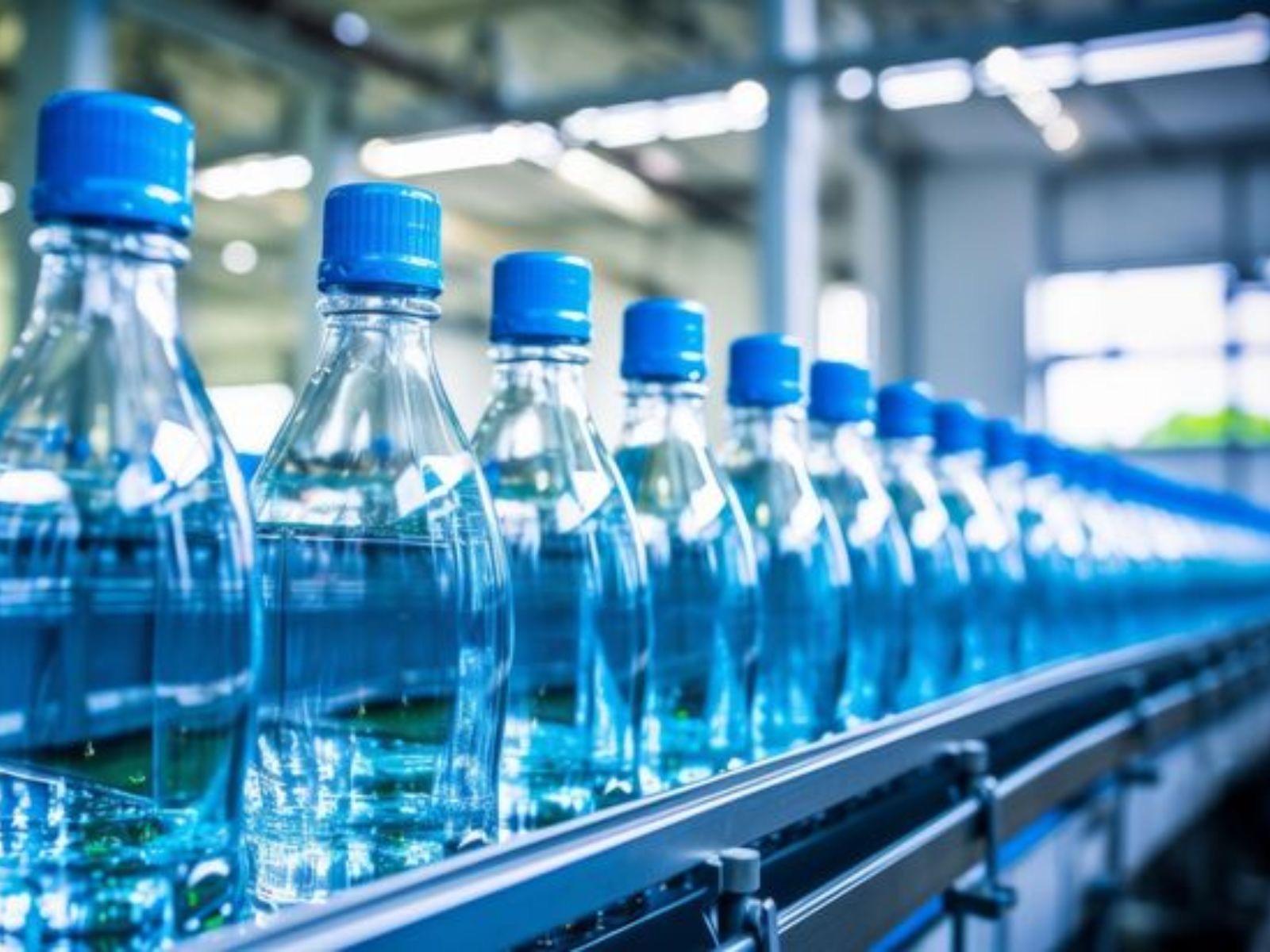
How to start a water plant business in India
Starting a water plant business in India takes ₹18–28 lakh for a 30 BPM line or ₹35–55 lakh for 60 BPM, roughly 4–6 months from decision to first sale, and a BIS IS 14543 licence before you may legally sell a single bottle. The sequence is: confirm your raw water with a lab analysis, secure a shed with three-phase power and drainage, order the plant, run the BIS and FSSAI applications in parallel with manufacturing, commission, then build distribution. Licensing is almost always the critical path — not the machinery.
| Step | Typical duration | What it depends on |
|---|---|---|
| Water analysis & site selection | 2–4 weeks | Borewell quality, shed availability |
| Plant manufacture | 8–12 weeks | Capacity and degree of automation |
| Civil, utilities & installation | 3–5 weeks | Runs partly in parallel with manufacture |
| BIS IS 14543 licence | 8–16 weeks | Usually the critical path. Start it early |
| FSSAI licence | 2–6 weeks | Can run alongside BIS |
| Commissioning & trial production | 1–2 weeks | — |
The rest of this guide covers each of those in detail, plus the running costs and ROI maths that decide whether the business actually works.
Why the packaged drinking water market in India is still a strong opportunity in 2026
India's packaged drinking water market crossed ₹26,000 Cr in 2024 and is forecast to touch ₹40,000 Cr by 2028, a CAGR of nearly 13%. Three structural drivers keep this growth predictable:
- Groundwater contamination & over-exploitation. The Central Ground Water Board classifies more than 17% of India's assessment units as over-exploited, with another 14% in the critical or semi-critical category. Households and businesses increasingly distrust direct tap or borewell water.
- Out-of-home consumption recovery. Post-COVID, HORECA, travel, weddings, and modern trade have all returned past 2019 levels, driving 200ml, 500ml and 1L SKUs.
- HOD (Home & Office Delivery) penetration. The 20-litre jar segment alone is growing 15% YoY in metros and Tier-1 cities.
If you're thinking about entering this category, here's how to do it right.
Step 1: Decide your scale (BPM tier)
The single most important decision is your bottles-per-minute (BPM) capacity. This drives everything: capex, plot size, manpower, and the geographic reach of your distribution.
| Plant size | Output (BPH) | Indicative capex (turnkey) | Best for |
|---|---|---|---|
| 30 BPM | 1,800 | ₹18 – 28 Lakhs | New entrants, Tier-2/3 cities |
| 60 BPM | 3,600 | ₹35 – 55 Lakhs | Regional brands, multi-district |
| 90 BPM | 5,400 | ₹55 – 80 Lakhs | Inter-state, modern trade entry |
| 120 BPM | 7,200 | ₹85 Lakhs – 1.4 Cr | National brand, HORECA contracts |
| 240 BPM | 14,400 | ₹2.2 – 4 Cr | Flagship national / multi-line |
Most first-time entrants under-budget on civil and utilities, plan 30–35% over the machine cost as the all-in turnkey number.
Step 2: Land, civil and utility planning
A 60 BPM plant, the most popular configuration, needs:
- Plot: 3,500–4,500 sq.ft. (covered shed: ~3,000 sq.ft.)
- Power: 50 kW connected, 3-phase
- Water: 3,000 LPH raw water (borewell or municipal feed)
- Drainage: RO reject typically 30–35% of feed, must be planned
If you're in Delhi NCR, Haryana, or Punjab, expect tighter civil norms; in Uttarakhand SIDCUL or HP BBN, expect tax incentives but slope-managed plot constraints.
Step 3: Licenses and approvals (this kills more new plants than machinery does)
The licensing stack is non-negotiable:
- BIS Certification (IS 14543), mandatory for packaged drinking water. The audit-driven process takes 90–120 days. Without it, you cannot legally label "Packaged Drinking Water".
- FSSAI License, central license for plants > 2 MT/day capacity. Single-window via fssai.gov.in.
- CGWB / state pollution board NOC, for groundwater extraction & RO reject discharge.
- GST registration & MSME / Udyam, operational basics.
- Trademark / brand name registration.
Budget ₹2.5–4.5 Lakhs for the entire license stack including consultant fees.
Step 4: Choose the right turnkey supplier
A "turnkey" supplier handles civil drawings, machinery, utilities, commissioning, and operator training, not just the machines. Three things to verify:
- Reference plants in your operating state (always visit at least one)
- Service depth in your region (ask for the engineer dispatch SLA)
- BIS / FSSAI documentation help, this is often the difference between a 4-month and a 9-month launch
At Neelohith Machines, our turnkey scope includes civil drawings, BIS documentation, FSSAI consultation, and 24x7 service for the first 6 months. Full disclosure: this article is published by us, but the steps above apply equally to any vendor you evaluate.
Step 5: Distribution & channel strategy
Most packaged water failures aren't manufacturing failures, they're distribution failures. Three patterns work:
- Local-first (radius ≤ 80 km): GT-driven, super-stockist + 30-50 retailers. Lowest investment, slowest scale.
- HOD-led (20L jar): higher margin, requires fleet investment, sticky customer base.
- HORECA / Institutional: bulk B2B contracts, long credit cycles, but stable volumes.
Most new entrants succeed by combining HOD + local-first for the first 18 months, then expanding into HORECA in year 2.
Step 6: ROI math (numbers most operators actually use)
For a 60 BPM plant running ~30,000 bottles/day at ₹2 net margin per 1L bottle:
- Daily gross margin: ₹60,000
- Monthly gross margin (26 working days): ₹15.6 Lakhs
- Operating cost (utilities, manpower, consumables): ~₹4.5 Lakhs/month
- Net operating profit: ~₹11 Lakhs/month
- All-in capex (₹50 Lakhs machinery + ₹15 Lakhs civil/utility): ₹65 Lakhs
- Payback: ~14 months
Conservative bands say 16–22 months. Anyone promising < 10 months is pricing you on a hypothetical 100% capacity utilisation that no real plant achieves.
Common mistakes to avoid
- Under-sizing the RO, running 80% of theoretical RO output continuously kills membranes. Always size 25% above peak demand.
- Skipping the QC lab, even a 60 BPM plant needs a basic on-site lab (pH, TDS, ozone residual, coliform). BIS audits are unforgiving here.
- Choosing the cheapest filling line, gravity fillers without volumetric correction give ±15ml variation, which fails BIS sampling.
- No backup ozonator, ozone is your final disinfection layer. A backup unit is non-negotiable.
- Ignoring labels & artwork, BIS specifies font sizes, statements, and placements. Print rejects can cost ₹2-3 Lakhs in dead inventory.
Bottom line
A 60 BPM plant with disciplined distribution can hit ₹11 Lakhs/month operating profit and pay back in 14–16 months. The machine is the easy part, licensing, plot selection, and distribution discipline are what separate plants that scale from plants that stagnate.
If you want a turnkey quotation matched to your state, plot size and target SKUs, request a free consultation. We typically share an itemised quotation within 24 hours.