Gable Top Cartons: A Future Packaging Option for Dairy and Beverages
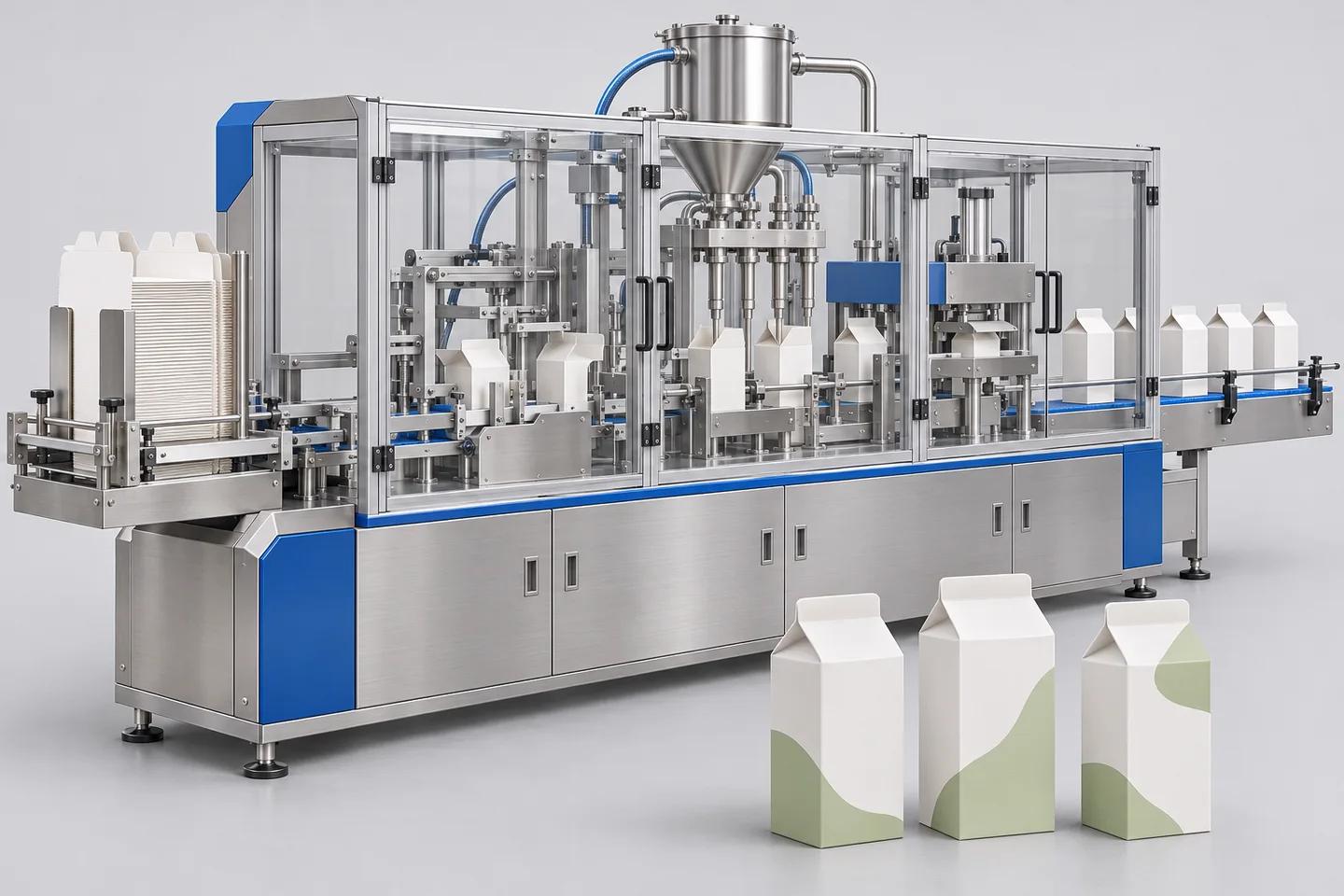
Representative equipment concept illustration; final machine and configuration are specified on enquiry.
Why brands are looking at the carton again
Gable top cartons offer a recognisable roof-shaped format for dairy and beverage brands, with a production route that must be matched to the product. Their future opportunity lies in combining useful packaging design with a workable filling, material-supply and distribution system.
A brand may want a different shelf presentation, a suitable pouring experience or a packaging option for a new product family. Those are valid reasons to investigate cartons. They become a sound machinery investment only when the pack performs through filling, transport, storage and consumer use.
The shape does not decide the shelf life
A gable top carton is a package shape, not a guarantee of aseptic performance. Many applications use chilled distribution. Aseptic gable top systems also exist, but require the appropriate product processing, packaging and filling controls.
For examples of the distinction, see Elopak’s chilled packaging systems and GLS Elopak’s aseptic carton range. These are technical references to packaging routes, not claims that Neelohith represents those brands.
If your launch depends on ambient distribution, put that requirement at the start of the enquiry. Do not buy a chilled filler and assume that a different carton or a hotter product will make the line aseptic.
Three decisions that shape the project
1. The product and distribution route
Define the beverage, process, intended storage conditions and target selling window. A milk line and a juice line may have different treatment, cleaning and validation needs. Any shared line must be assessed for both product compatibility and allergen changeovers.
2. The actual carton
Approve a drawing and material specification, not just a pack volume. The blank dimensions, board and barrier structure, sealing surfaces, opening style and closure arrangement affect equipment selection. The available format range must be confirmed for the chosen machine.
3. The operating pattern
A brand making a small number of products in long runs has a different changeover burden from a mixed-SKU operation. Include cleaning, format parts, operator access, maintenance and packing in the proposed shift plan.
What the filling line does
A typical conceptual sequence covers blank handling, carton erection, bottom sealing, filling, top sealing and discharge. The product and packaging treatment steps depend on the selected hygiene system. Coding, inspection and secondary packing complete the production scope.
The gable top carton filling and sealing machine focuses on the carton filler. The integrated gable top packaging line provides an enquiry route for coordinating upstream processing and downstream handling as well.
Compare total operating cost per saleable pack
| Cost or constraint | What to compare |
|---|---|
| Packaging supply | Approved blanks, closures, minimum orders and lead times |
| Production time | Run length, cleaning, changeover and start-up losses |
| Utilities | Electrical, air, water, heating and cooling requirements |
| Distribution | Required temperatures, secondary packs and damage rates |
| Service | Wear parts, access, training and agreed support terms |
A low machine price may not be the lowest operating cost. Conversely, a highly automated line may be difficult to justify before sales volumes are established. Model the actual operating schedule and pack mix, then ask suppliers to make exclusions explicit.
A careful approach to environmental claims
Paperboard content alone does not establish the overall environmental impact of a finished carton. Evaluate the complete material structure, product protection, transport, collection and local recycling arrangements. Ask packaging suppliers for evidence that matches the exact material and market.
Avoid treating all cartons as plastic-free or universally recyclable. The useful commercial question is what happens to this pack in the locations where your customers will use it, and whether the pack protects the drink throughout its intended life.
Is gable top right for every beverage?
No. Suitability depends on the formulation, processing route, material barrier, seal and intended use. Carbonated products, particulates and demanding storage conditions require specific technical review rather than a general carton recommendation.
What should a buyer send to Neelohith?
Send the beverage type, target packs per hour, intended carton sizes, available material specification, storage requirements and project location. Include planned product changes and the utilities already available.
Our new gable top machinery range is quoted to those requirements. Capacity, supported formats, machine manufacturer, commissioning, training and validation responsibilities are confirmed in the proposal.
For a wider comparison, review aseptic processing and aseptic brick carton packaging before fixing the final format.