Aseptic Brick Cartons and “Tetra” Packaging: What the Future Requires
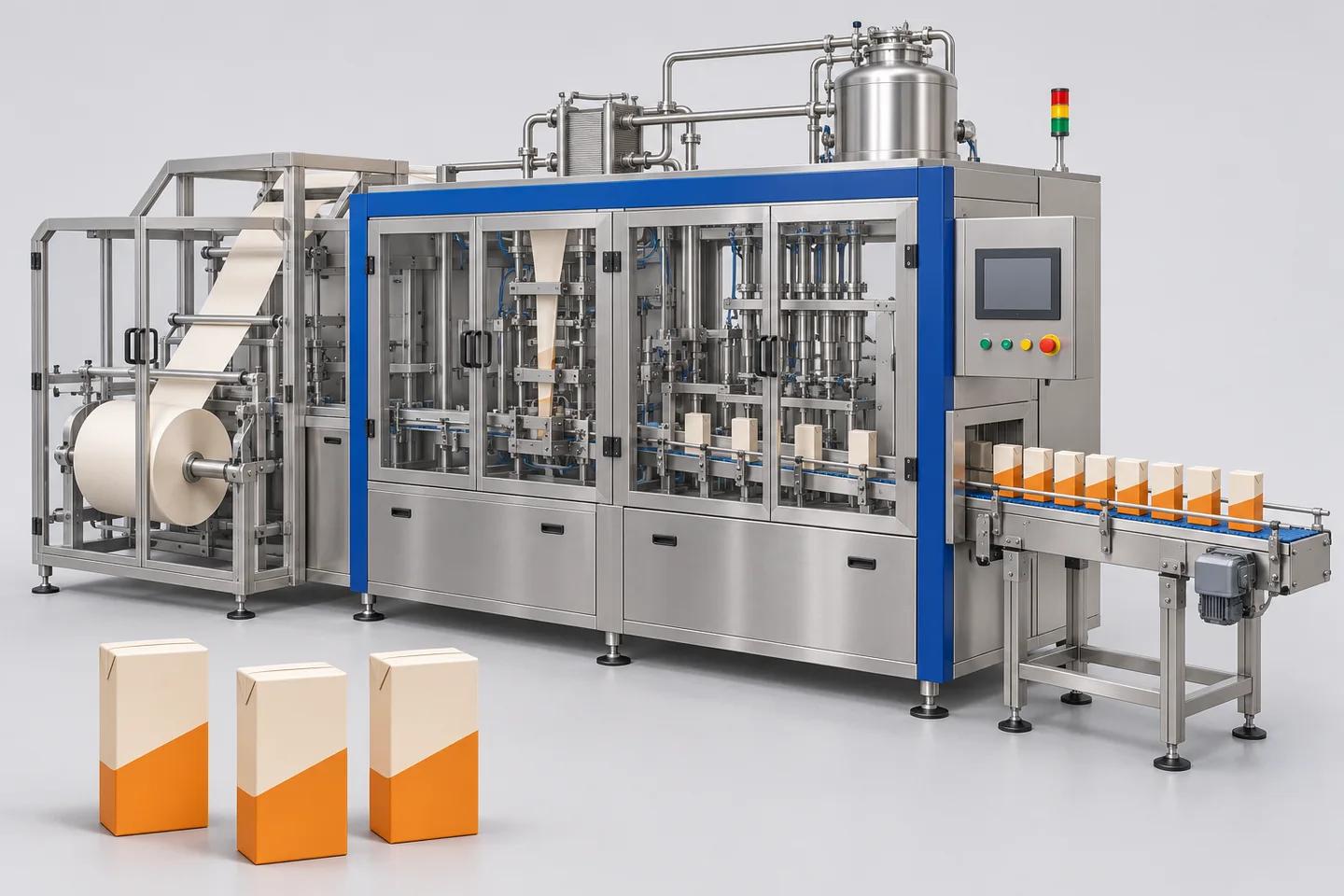
Representative equipment concept illustration; final machine and configuration are specified on enquiry.
Start by naming the packaging correctly
Aseptic brick cartons are rectangular beverage packs used within a matched processing and packaging system. Buyers often say “Tetra” when describing the format, but Tetra Pak is a brand. A procurement enquiry should identify the actual machine, material and supported pack design.
Neelohith’s aseptic brick carton machinery range covers new equipment specified on enquiry. References to Tetra terminology do not imply an authorised dealership, affiliation or compatibility with every proprietary system.
Why this format belongs in a future packaging discussion
A rectangular pack gives buyers a practical starting point for shelf presentation, case design and handling. When the product and package are validated for ambient storage before opening, the commercial model may also reach beyond an existing chilled distribution network.
Those are opportunities to evaluate, not automatic savings. Freight efficiency depends on the exact pack, case and pallet pattern. Inventory value depends on demand and the selling window. The line must support the product that customers will actually buy.
Protect the product before promising the pack
Aseptic carton production links product treatment, material preparation, controlled filling and sealing. Material barriers and package integrity help protect the contents through the specified distribution conditions. The final shelf-life claim belongs to the validated product-package system.
Tetra Pak’s aseptic packaging overview explains this system approach and its role in ambient distribution. A third-party description of a particular package does not establish the performance of another supplier’s line.
Five procurement decisions that matter
Machine identity and acceptance criteria
Ask for the manufacturer, model, equipment condition and supported applications in the written proposal. The new Neelohith range does not advertise refurbished Tetra Pak machines. Output and acceptance tests must refer to your actual product and pack.
Material supply
Determine whether the selected system uses a specified laminate web or prepared blanks, and identify the approved materials. Confirm dimensions, tolerances, barriers, sealing requirements and supplier responsibilities. Do not assume that similar-looking materials are interchangeable.
Product range
A beverage’s viscosity, particulates and formulation can change the filling and processing requirements. Include all planned SKUs in the brief. Switching from juice to a dairy or plant-based formulation requires more than changing the artwork.
Openings and secondary equipment
Caps, straws, coding, inspection, conveyors and case packing have their own format and speed requirements. List each included item and its interface to the filler. This prevents a quotation for one machine being mistaken for a complete operating line.
Commissioning and lifecycle support
Confirm site preparation, utility quality, training, spares, warranty and the handover records. Define who establishes the process, checks package integrity and releases product. A line needs a workable support plan throughout its operating life.
Compare proposals on a common scope
| Proposal item | Evidence to request |
|---|---|
| Equipment | Named manufacturer and model, supported product and format range |
| Packaging | Approved material specification and supplier confirmation |
| Capacity | Rated and expected net output for the agreed operating schedule |
| Utilities | Demand, required quality and site-supplied versus included items |
| Quality | Testing, validation and documented acceptance responsibilities |
| Commercial terms | Price scope, lead time, warranty, service and exclusions |
The aseptic brick carton filler is an equipment enquiry. The integrated aseptic carton line expands the discussion to treatment interfaces, utilities and finished-pack handling. Keep that scope distinction when comparing prices.
Materials and recycling need a local answer
Do not build the investment case around an unsupported claim that every carton is plastic-free, carbon-neutral or recyclable everywhere. Obtain the actual material structure and evidence relevant to the region where it will be sold. Collection and processing infrastructure affect what happens after use.
Product losses also belong in the assessment. A packaging system that looks efficient on a material spreadsheet can still perform poorly if seals fail, distribution damages packs or the product does not sell within its validated life.
What is the future-facing decision?
Choose a system with a documented product and pack envelope, a dependable material route and an operating model that matches demand. Plan changeovers, inspection and maintenance alongside nominal speed. Future flexibility is useful only when the selected machine and materials can actually support the next format.
Compare gable top cartons if a roof-shaped pack is part of the brand plan, and aseptic processing systems when defining the upstream treatment. Share your formulation category, pack drawing, target output and distribution plan to request a specification from Neelohith.