Why Aseptic Processing Matters for the Future of Beverage Production
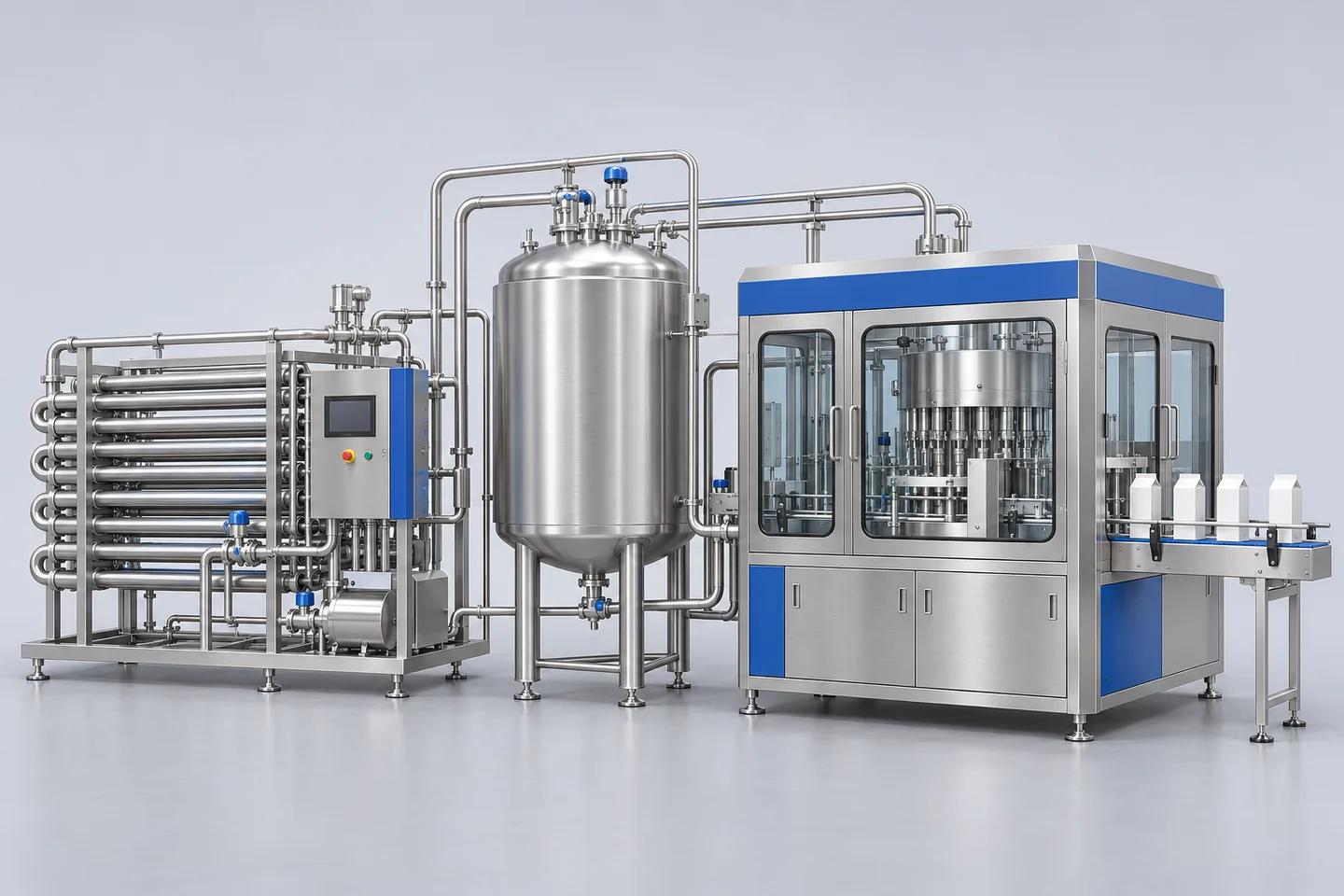
Representative equipment concept illustration; final machine and configuration are specified on enquiry.
The opportunity starts with distribution
Aseptic processing can help suitable beverages reach wider markets through validated ambient distribution before opening. Its value comes from coordinating product treatment, sterile handling and protective packaging. Buying a filler on its own does not establish the shelf life of a finished drink.
For a beverage producer, this opens a different planning question: could the business serve distributors beyond its present chilled delivery network? The answer depends on the recipe, package, process validation and commercial demand. Our view is that aseptic technology will remain important because it gives producers another route to market, alongside established chilled and hot-fill systems.
Tetra Pak’s technical overview of aseptic packages explains how the technology can support ambient distribution when processing and packaging are coordinated. That general principle is not a performance claim for an unspecified machine.
Aseptic and UHT describe different things
UHT describes a heat-treatment approach. Aseptic describes how prepared product and packaging are brought together while controlling recontamination. An equipment specification needs to state both the product process and the filling environment.
Start with the beverage: acidity, viscosity, particles, fat and protein content, formulation variability and the quality attributes that matter to customers. These affect equipment selection and the validation plan. Do not reuse a time-temperature setting from another product as a shortcut.
The UHT and aseptic processing system is an enquiry route for specifying the upstream process. An integrated aseptic beverage line also brings the filling and packaging interfaces into the project scope.
Why the business case extends beyond the machine
A longer validated selling window may give a distributor more time to move stock and reduce the pressure of very frequent deliveries. Whether that creates value for your business depends on order volumes, returns, inventory financing, sales territory and actual demand.
Ambient distribution can change the cold-chain requirement for an unopened validated product. It does not remove all energy consumption: product treatment, cleaning, utilities and packaging manufacture still have costs. Any financial or environmental comparison should include those stages and the expected product losses.
Specify a system, then calculate saleable output
| Project block | What to establish before ordering |
|---|---|
| Product treatment | Formulation range, treatment duty and validation responsibility |
| Sterile transfer | Buffering, valves, controls and interfaces with the filler |
| Filling and sealing | Approved packs, material treatment, filling environment and seal checks |
| Cleaning | Cleaning and sterilisation cycles, chemical and utility requirements |
| Quality release | Sampling, inspection, traceability and batch-release responsibilities |
A nominal filling speed is only one input. Calculate saleable packs after planned cleaning, sterilisation, changeovers, maintenance and rejects. Ask the supplier to define acceptance tests with your product and pack. Compare proposals on the same scope and operating schedule.
Where the investment can make sense
An established brand with demand across several distribution territories may have a clearer case than a launch with untested sales. A producer with a narrow product range and long runs may organise the line differently from a business changing flavours and pack formats several times a shift.
Before buying, compare an owned line with other realistic supply options, including suitable contract packing where available. An expensive machine sitting idle does not create market access. Equally, an undersized or poorly integrated line can constrain a product that has already found demand.
Questions to put in the technical enquiry
- Which exact beverages and packaging materials are included in the validated operating envelope?
- What is the agreed output for each pack, including planned downtime?
- Which utility conditions must the site provide, and which equipment is included?
- Who performs trials, commissioning, training and product validation?
- What evidence supports package integrity and the intended storage conditions?
- How are spare parts, service access, warranty and exclusions documented?
Does aseptic automatically mean twelve months of shelf life?
No. Shelf life is specific to the beverage, treatment, packaging, seal and storage conditions. It must be established and supported for the finished product. A generic equipment listing cannot promise a fixed number of months.
Does an aseptic filler work with any carton?
No. The filler and material system must be compatible. Carton dimensions, barrier structure, sealing behaviour and opening features are all procurement decisions. See the aseptic brick carton guide for those questions.
Plan your next step
Neelohith is accepting enquiries for new aseptic machines with specifications on enquiry. Share your recipe category, pack, target output, intended distribution and site conditions through the aseptic systems page. We use that brief to define the equipment and the responsibilities that belong in the quotation.