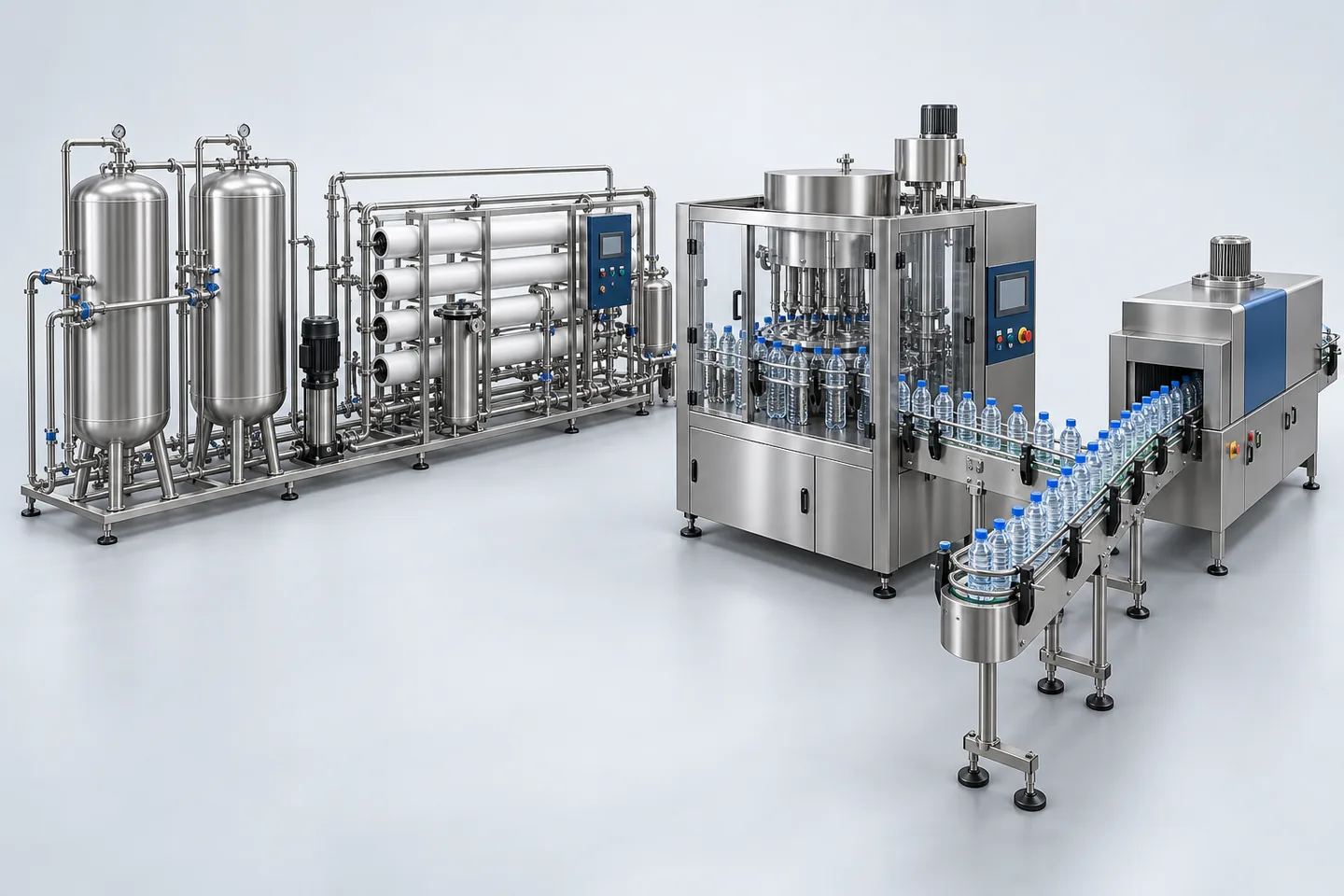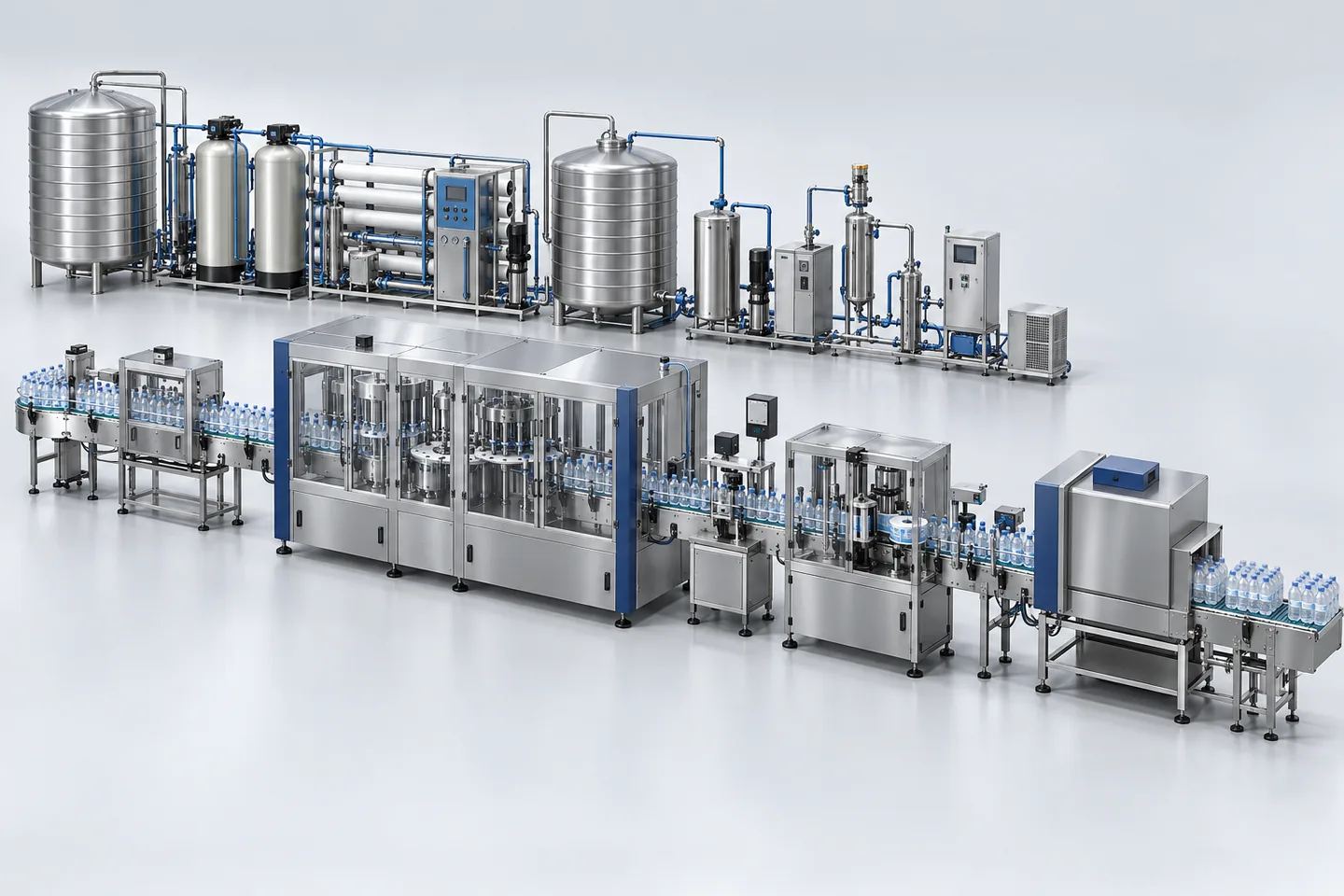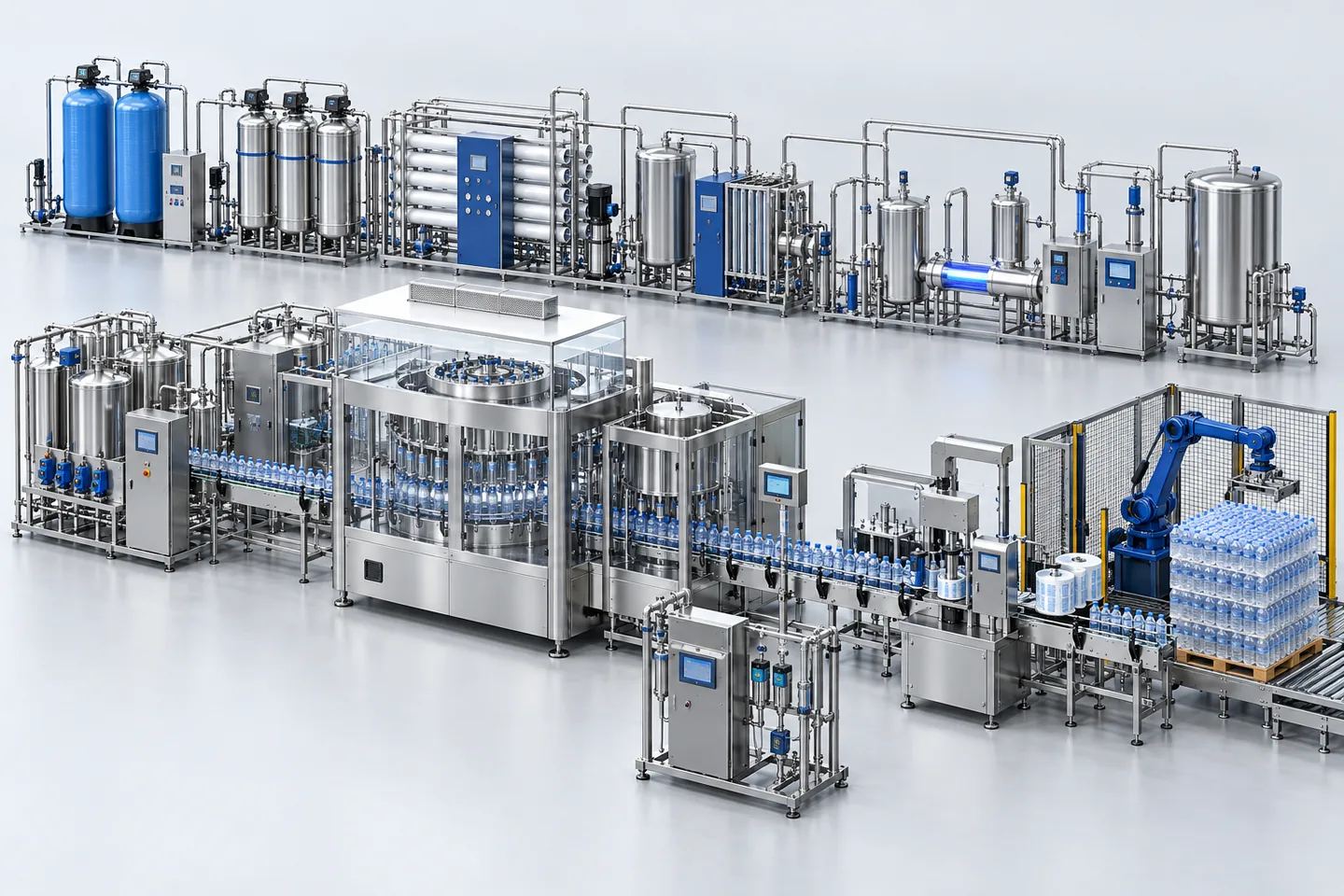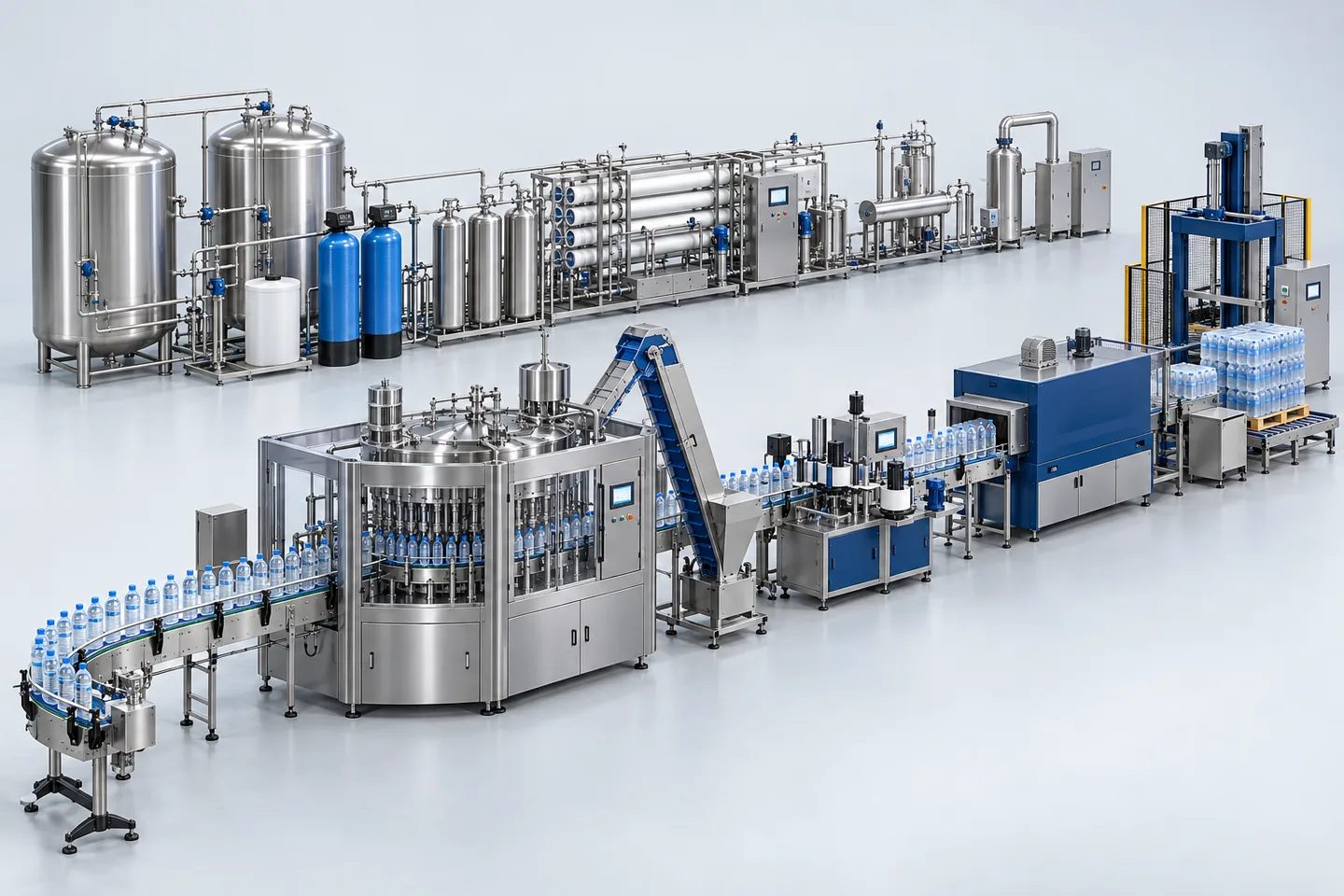
Built for the way your line actually runs.
A 90 BPM (5400 BPH) high-speed automatic line for water brands graduating from regional to inter-state distribution. The 36-12-8 RFC monoblock is paired with high-recovery RO and a tunnel-style shrink wrapper.
The 90 BPM bottling line uses high-precision rotary capping, double pre-form rinsing, and a 1500 LPH twin-pass RO with auto-flush for consistent quality on hard water. Designed for ≥ 18 hours continuous operation with minimal downtime.
Who this configuration suits.
Get a detailed quote for the 90 BPM Plant.
Layout drawing, utility schedule, BIS / FSSAI checklist, itemised quotation in 24 hours.
Everything we ship with this plant.
Standard turnkey scope. Optional add-ons quoted on request.
Specs at a glance.
| Output | 90 BPM (5400 BPH) |
| Bottle sizes | 200ml to 2L PET |
| Filling type | Servo gravity / Pressure |
| Power load | 60–75 kW |
| Water requirement | 4500 LPH raw water |
| Recovery | 75–80% |
| Footprint | 4500–5500 sq.ft. |
| Manpower | 7–9 per shift |
What does a 90 bpm plant cost?
A 90 BPM Mineral Water Bottling Plant costs ₹55–80 lakh turnkey in India as an indicative range. Final pricing depends on your feedwater analysis, whether the scope is turnkey or machinery-only, your SKU mix and the utilities already on site.
Indicative market range for a turnkey line, not a quotation. The figure moves with feedwater quality, whether the scope is machinery-only or turnkey, how many SKUs you run and what utilities already exist on site.
Output, degree of automation and whether you need redundancy on critical stations.
A high-TDS, iron-heavy or seasonal input changes the treatment train and its cost materially.
Machinery only, or turnkey with civil drawings, utilities, commissioning and BIS / FSSAI documentation.
Number of SKUs, bottle sizes and how fast you need to switch between them.
Common questions.
Can the 90 BPM line handle harder borewell water?+
Yes. Our 90 BPM plant ships with a twin-pass RO (TDS reduction up to 95%) and an auto-flush sequence that protects membranes against scaling on > 1500 ppm feed water.