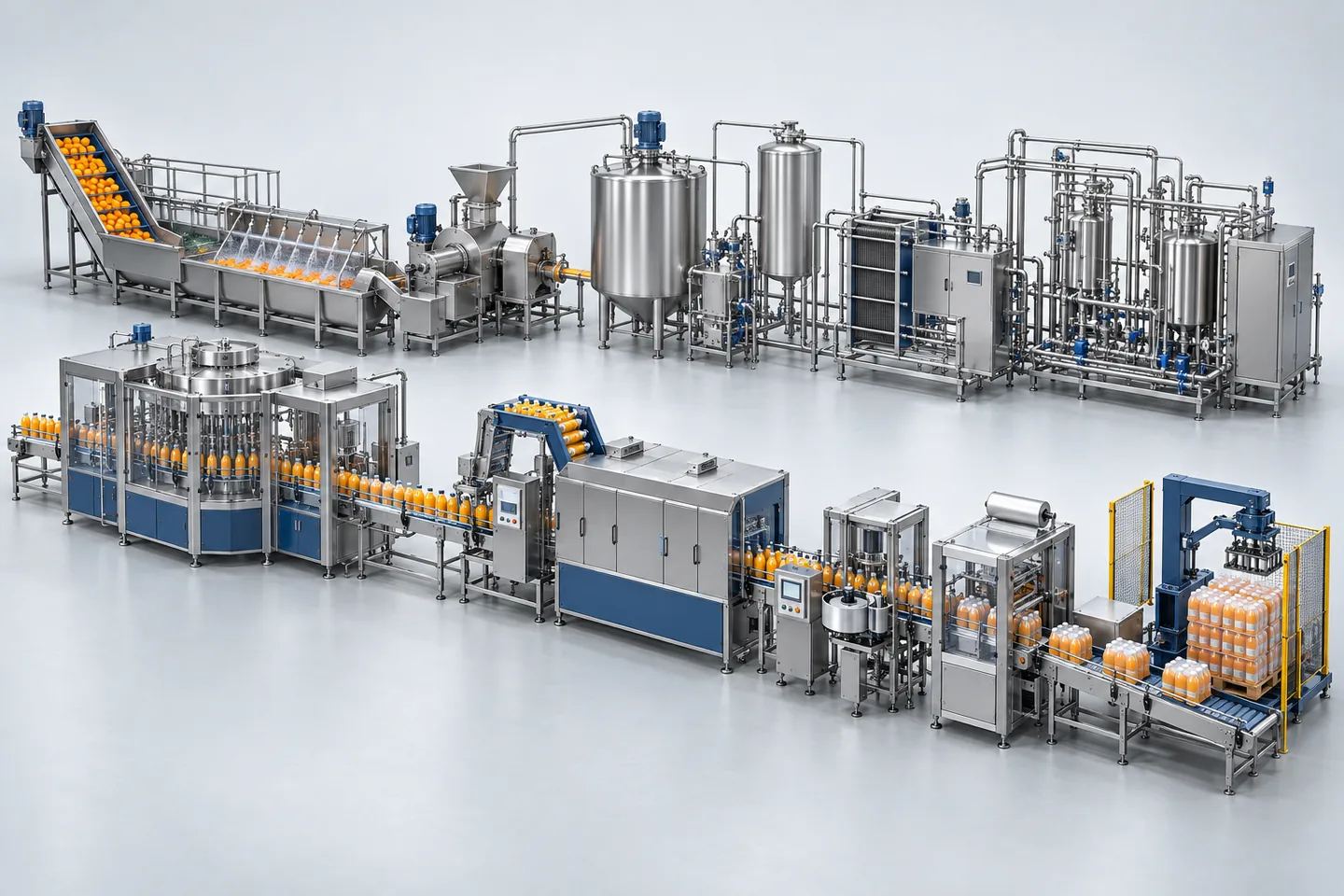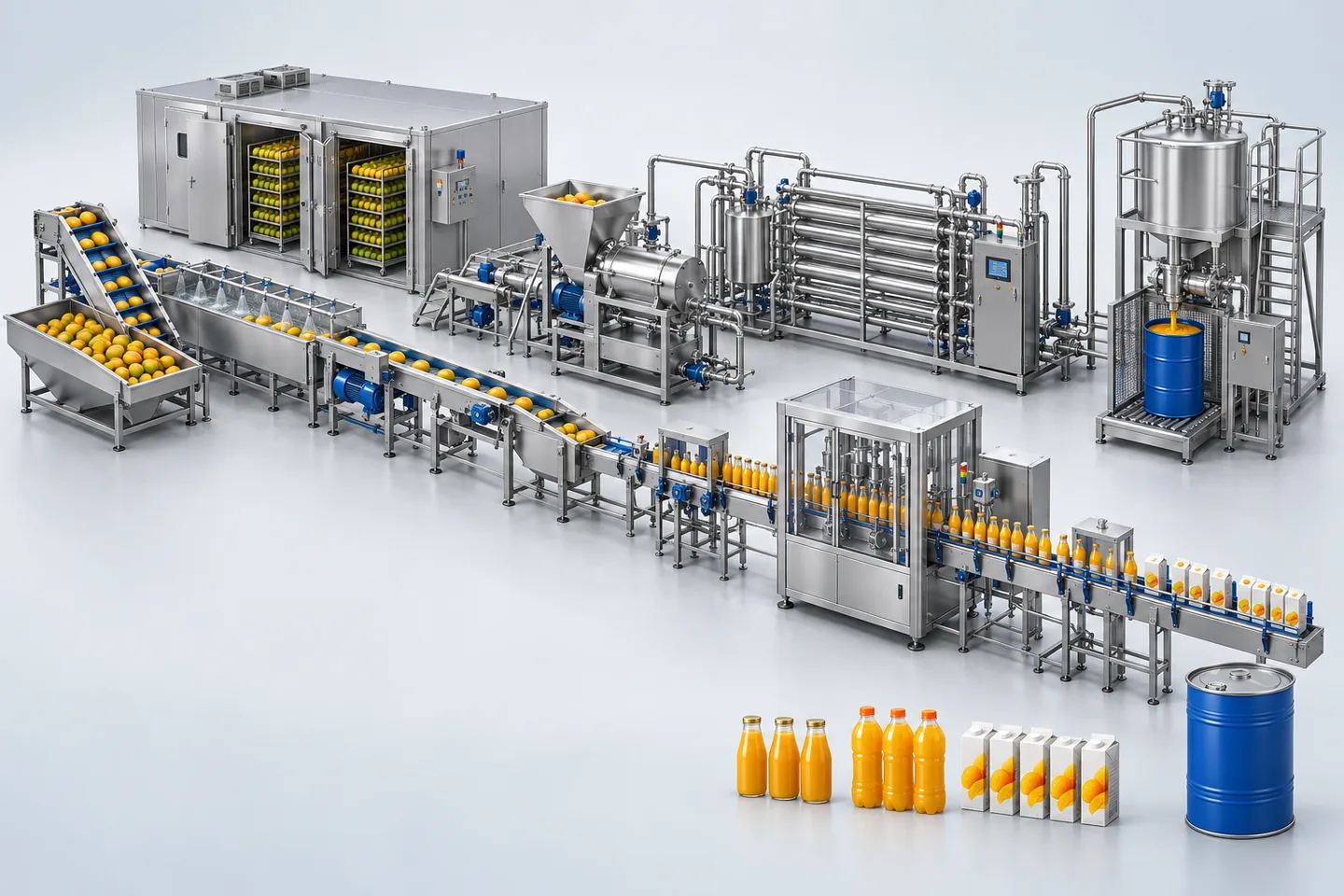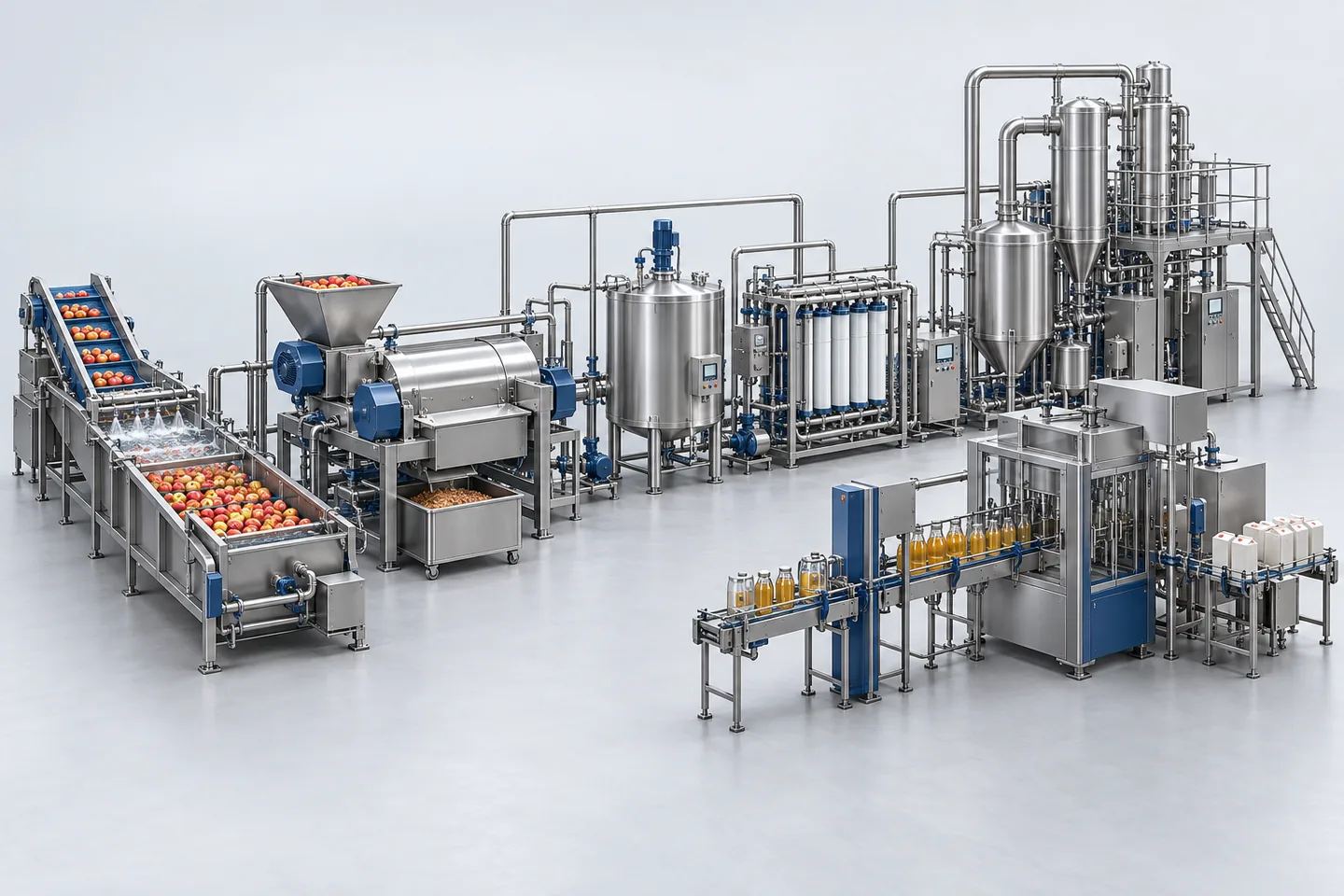
Built for the way your line actually runs.
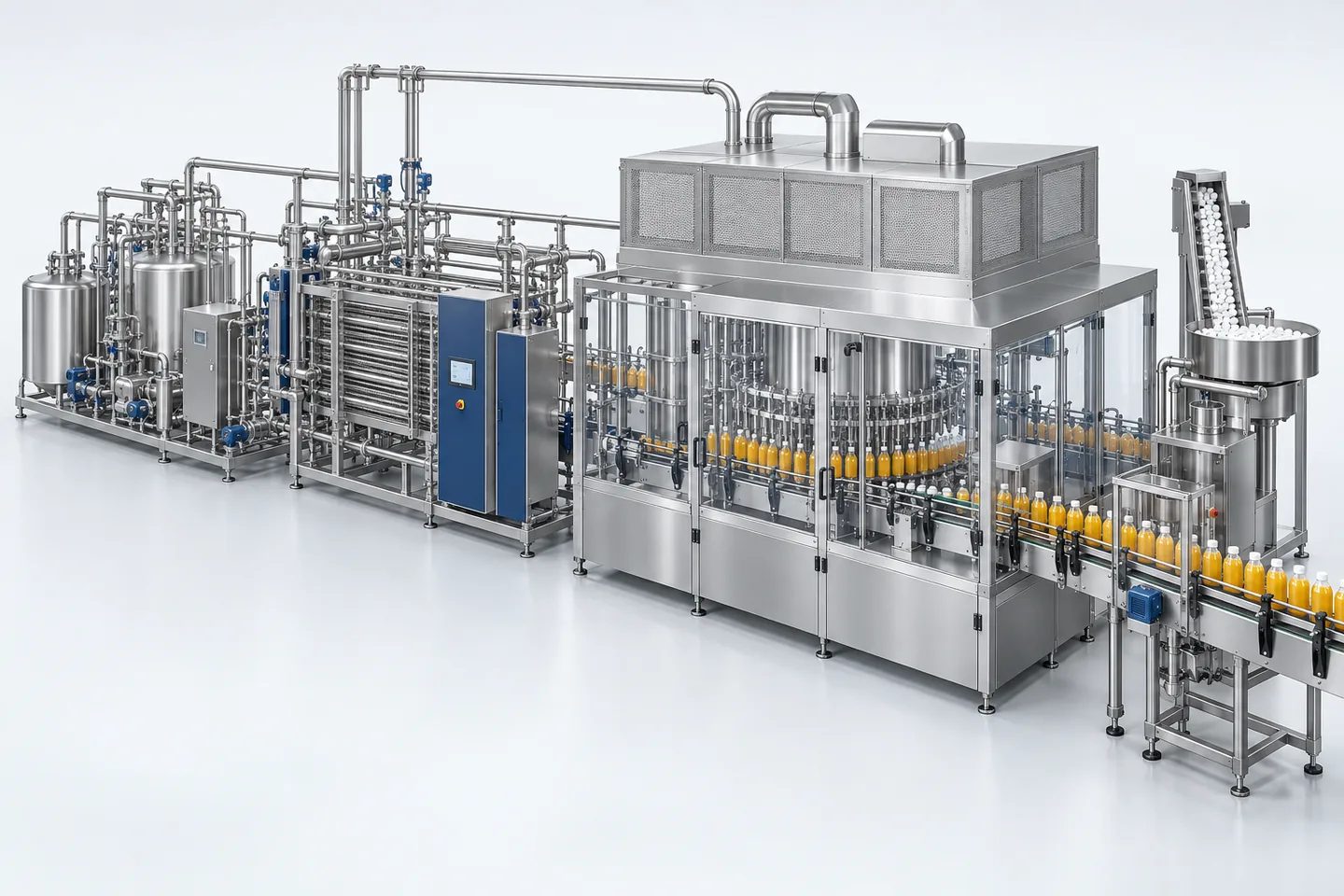
Aseptic-fill juice bottling plants, UHT pasteurisation, sterile filling environment, sterile cap and bottle, and HEPA-filtered Class-100 zone. Achieves 12-month shelf life without preservatives.
UHT plate / tubular pasteuriser, aseptic filling chamber, sterile cap feeder, and CIP / SIP automation. Suitable where preservative-free claim is mandatory.
Who this configuration suits.
Get a detailed quote for the Aseptic Juice Line.
Layout drawing, utility schedule, BIS / FSSAI checklist, itemised quotation in 24 hours.
Everything we ship with this plant.
Standard turnkey scope. Optional add-ons quoted on request.
Specs at a glance.
| Output | 60 – 240 BPM |
| Pasteurisation | 136–142°C / 4–6 sec UHT |
What does a aseptic juice line cost?
A Aseptic Juice Bottling Plant costs ₹2.5–5 crore turnkey in India as an indicative range. Final pricing depends on your feedwater analysis, whether the scope is turnkey or machinery-only, your SKU mix and the utilities already on site.
Indicative planning range, not a quotation. Scope is stated for each configuration. Final pricing depends on capacity, product and bottle specifications, utilities, installation requirements and agreed scope.
Output, degree of automation and whether you need redundancy on critical stations.
A high-TDS, iron-heavy or seasonal input changes the treatment train and its cost materially.
Machinery only, or turnkey with civil drawings, utilities, commissioning and BIS / FSSAI documentation.
Number of SKUs, bottle sizes and how fast you need to switch between them.
Industry terms used here.
A controlled heat-treatment process that inactivates pathogens and spoilage organisms in beverages, typically 72–95°C for juice, 136–142°C UHT for aseptic.
Filling sterilised product into pre-sterilised bottles within a HEPA-filtered Class-100 environment, enables 12-month shelf life without preservatives.
A high-temperature steam or chemical sterilisation cycle run on installed equipment without disassembly, required for aseptic operations.
A food-safety management system that identifies, evaluates, and controls hazards across processing, required for HORECA, institutional and export contracts.
International food-safety management standards combining HACCP principles with management-system requirements, required for most beverage exports.
A multi-layer aseptic carton-pack format using paperboard + LDPE + aluminium foil, popular for shelf-stable juice and dairy in India.