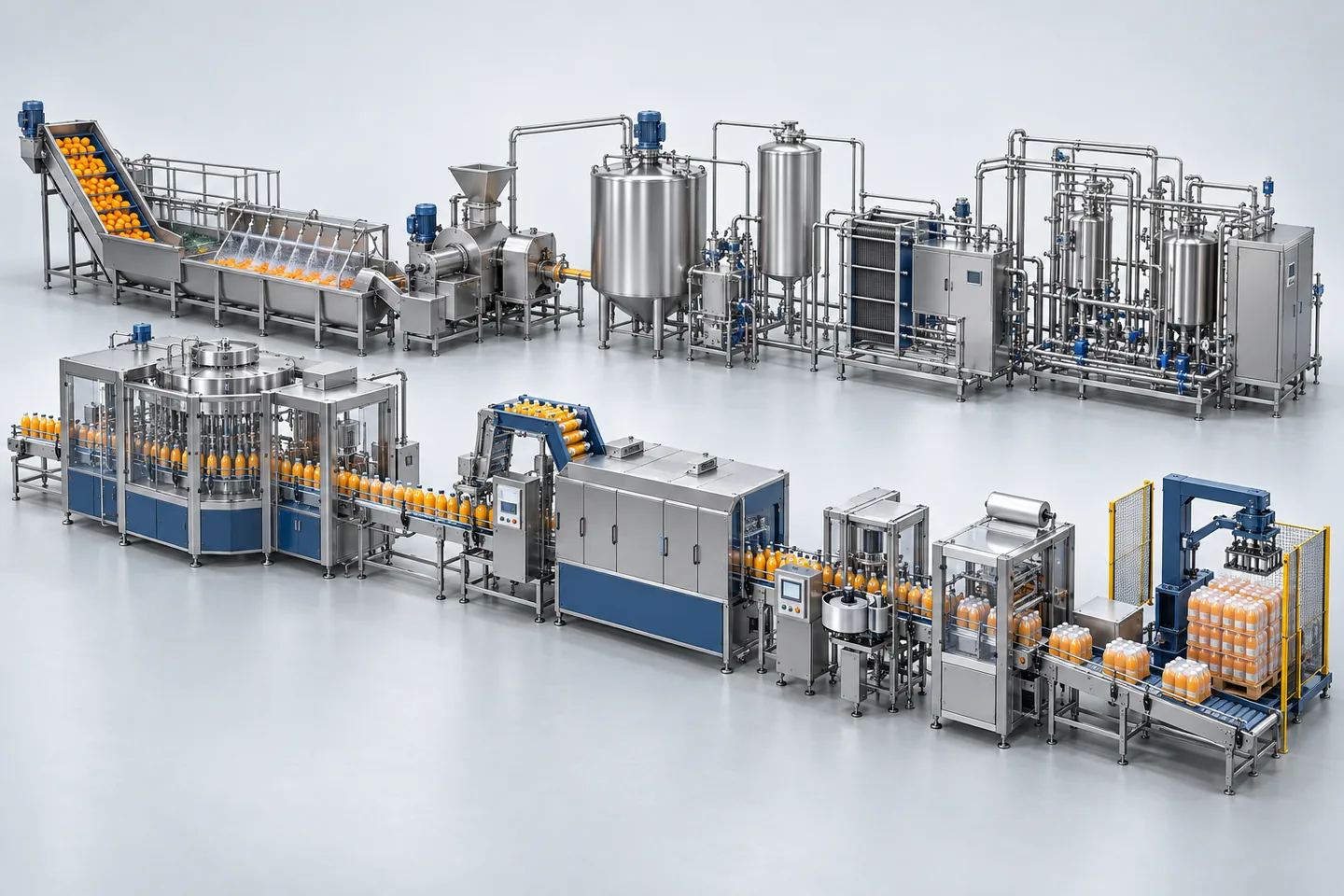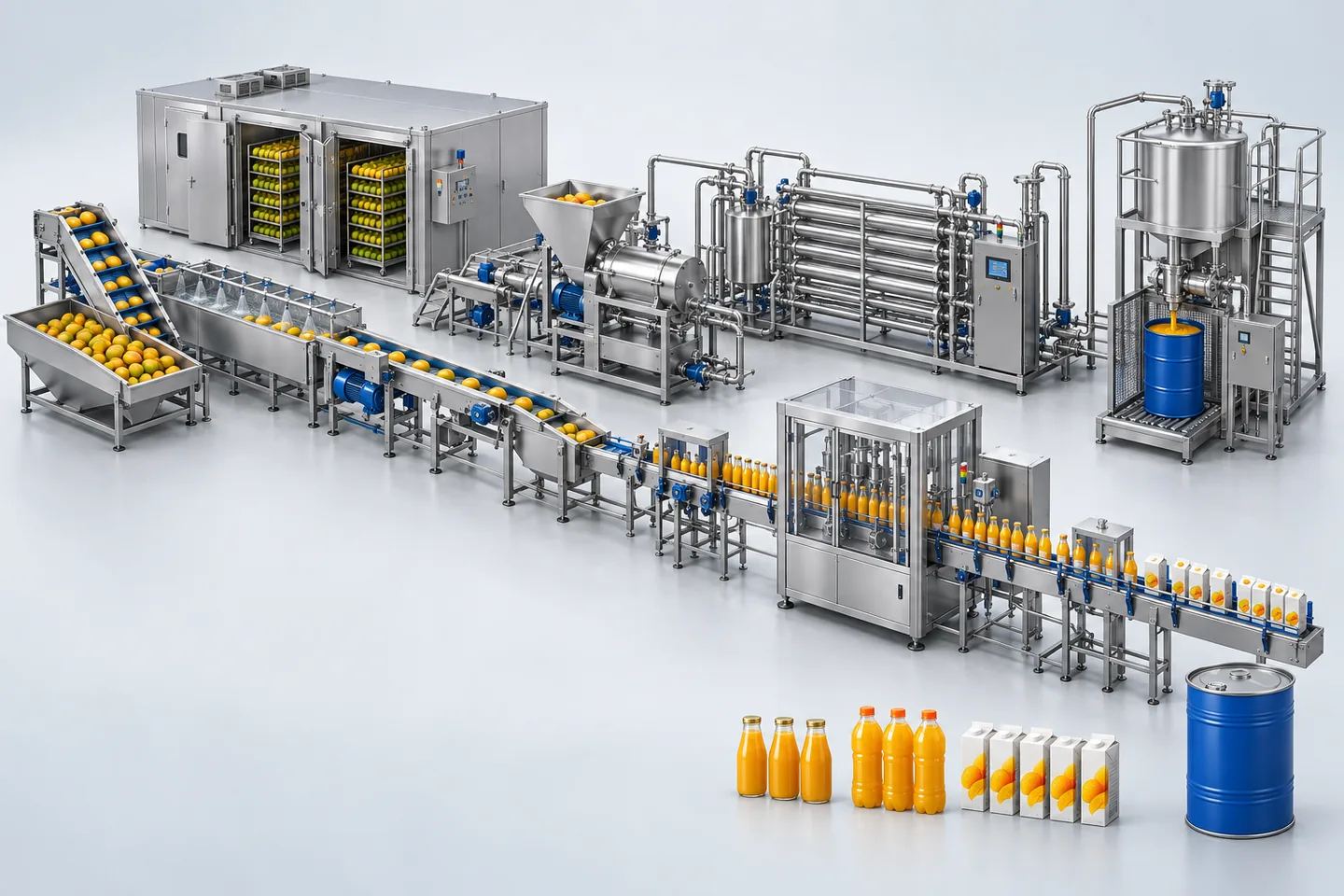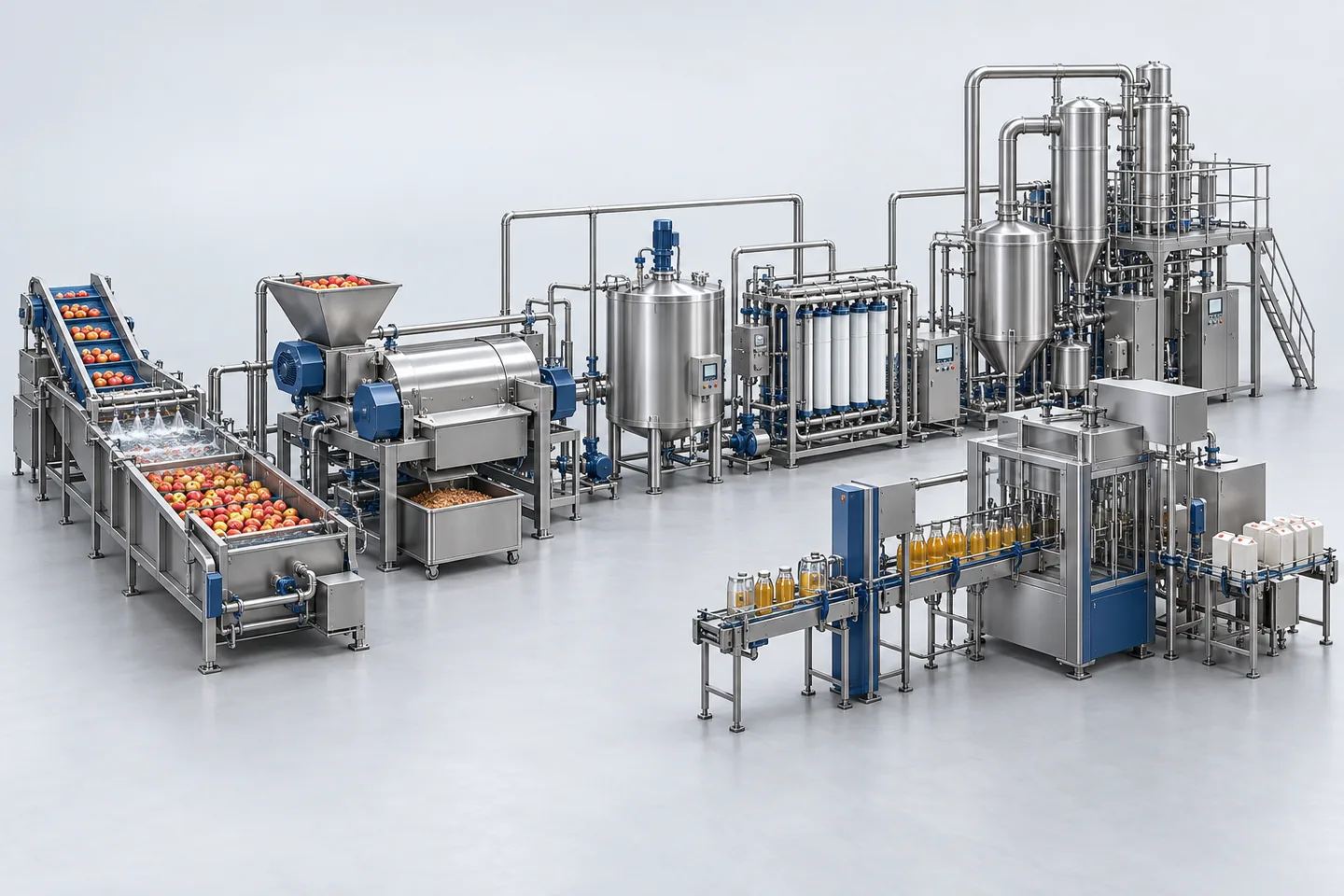
Built for the way your line actually runs.
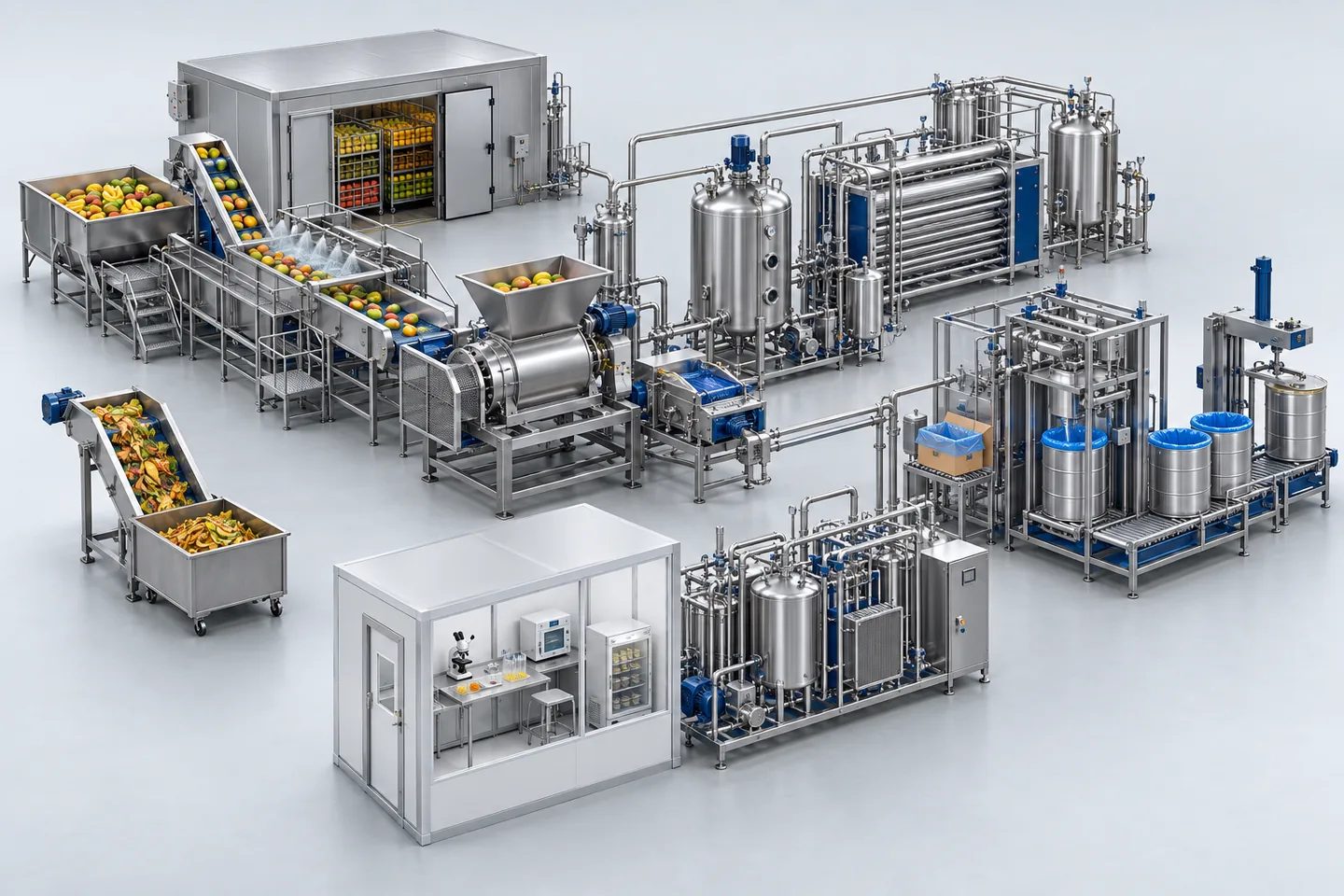
A turnkey aseptic fruit pulp and puree plant — washing, pulping, finishing, deaeration, sterilisation and aseptic bag-in-drum or bag-in-box filling for mango, guava, tomato, papaya and banana.
Bulk aseptic pulp is the backbone of Indian fruit processing. It is what lets a mango plant harvest for six weeks and sell for fifty-two, and it is the product that beverage companies, dairies and export buyers actually purchase in volume. The line is built around sterility rather than presentation: fruit is washed, pulped and finished, the pulp is deaerated to protect colour, sterilised through a tubular steriliser sized for high-viscosity product, cooled aseptically, and filled into pre-sterilised aseptic bags inside 220 kg steel drums or 20 kg cartons. Every part downstream of the steriliser is steam-sterilised before each run, and the filler is a validated aseptic head — this is not a place to economise.
Who this configuration suits.
Get a detailed quote for the Fruit Pulp Plant.
Layout drawing, utility schedule, BIS / FSSAI checklist, itemised quotation in 24 hours.
Everything we ship with this plant.
Standard turnkey scope. Optional add-ons quoted on request.
Specs at a glance.
| Capacity | 3 – 20 tonnes fruit/hour |
| Products | Mango, guava, tomato, papaya, banana pulp & puree |
| Brix output | 14 – 28 °Bx depending on fruit |
| Sterilisation | Tubular, high-viscosity configured |
| Pack formats | 220 kg aseptic drums, 20 kg bag-in-box |
| Shelf life | 18–24 months ambient |
| Power load | 150–350 kW |
| Steam | 1,500–4,000 kg/h |
| Footprint | 10,000–20,000 sq.ft. |
| Manpower | 20–35 per shift |
Price on Request.
Every plant is quoted against your capacity, feedwater analysis, plot and product mix. Send us those and you get an itemised proposal within 24 hours.
Output, degree of automation and whether you need redundancy on critical stations.
A high-TDS, iron-heavy or seasonal input changes the treatment train and its cost materially.
Machinery only, or turnkey with civil drawings, utilities, commissioning and BIS / FSSAI documentation.
Number of SKUs, bottle sizes and how fast you need to switch between them.
Common questions.
What commercial advantage does aseptic pulp give?+
It decouples your harvest from your sales calendar. You buy fruit at harvest-season prices, store it as ambient pulp for 18–24 months, and sell into a market that pays year-round. It also opens export, which is where most of the margin in Indian fruit processing sits.
How is aseptic pulp validated?+
Every batch is incubated — typically 7 days at 30–37°C — and tested before release. The plant is designed so the steriliser, cooler, buffer and filler can be steam-sterilised as one closed loop, because a single non-sterile junction fails the whole batch.