Built for the way your line actually runs.
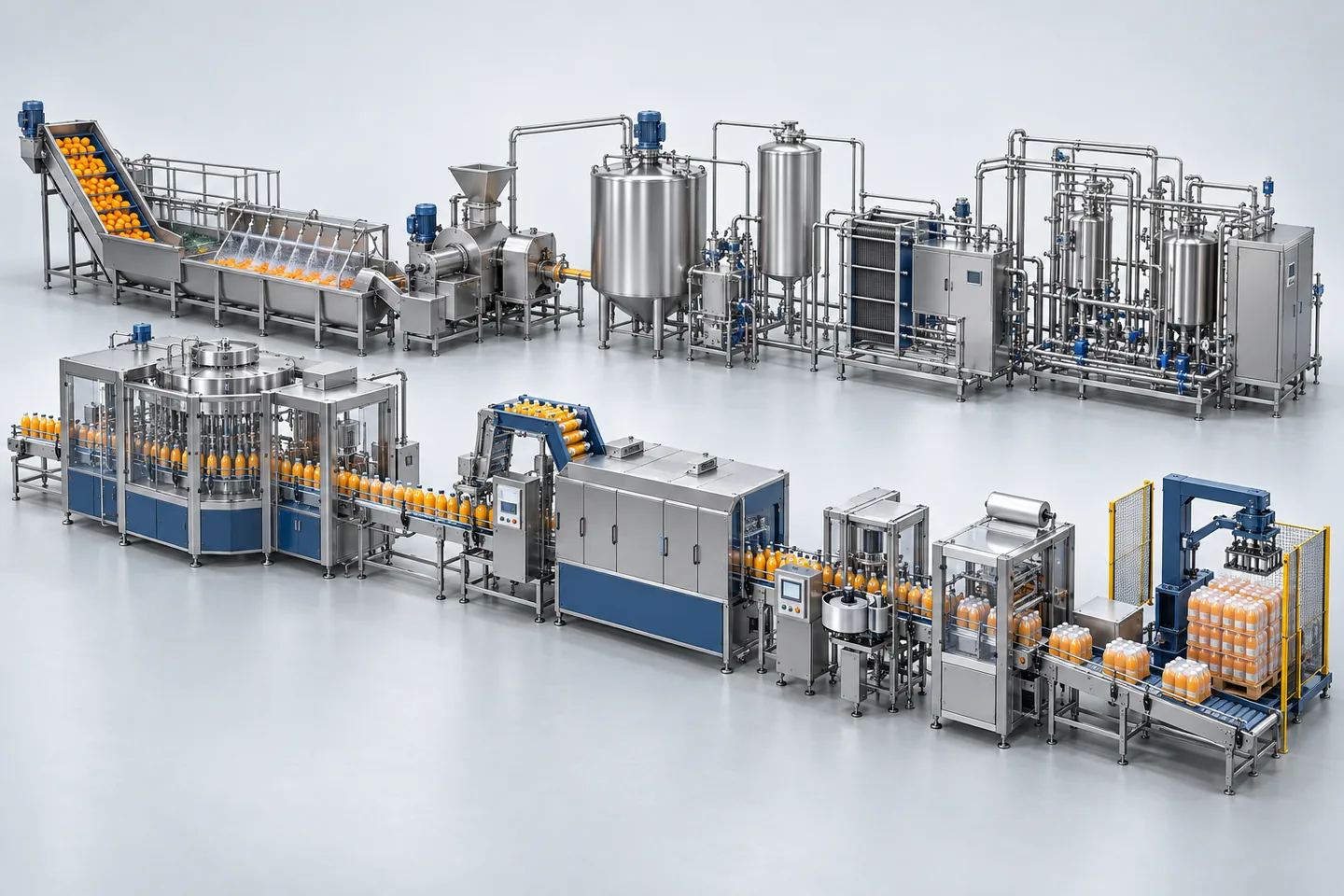
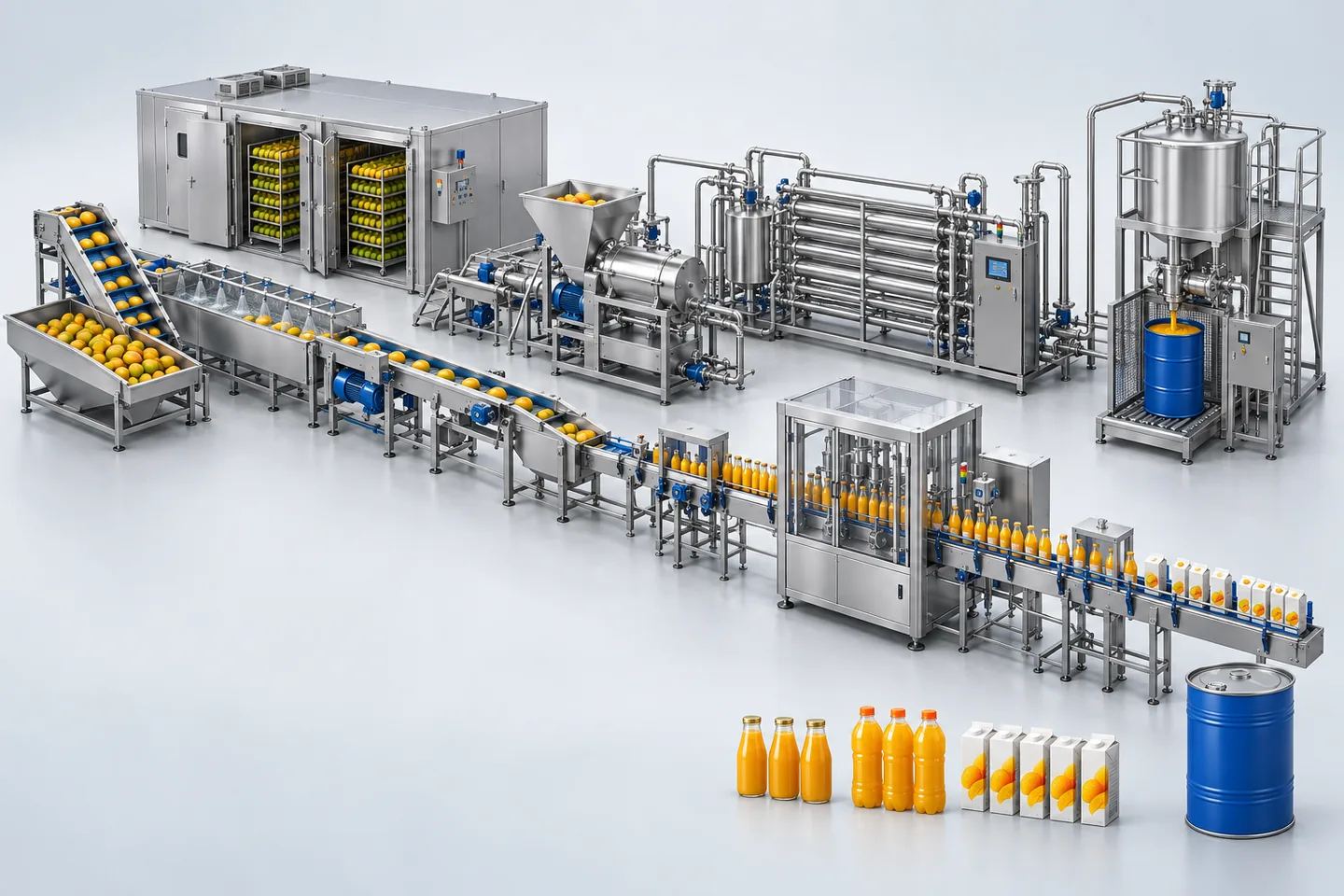
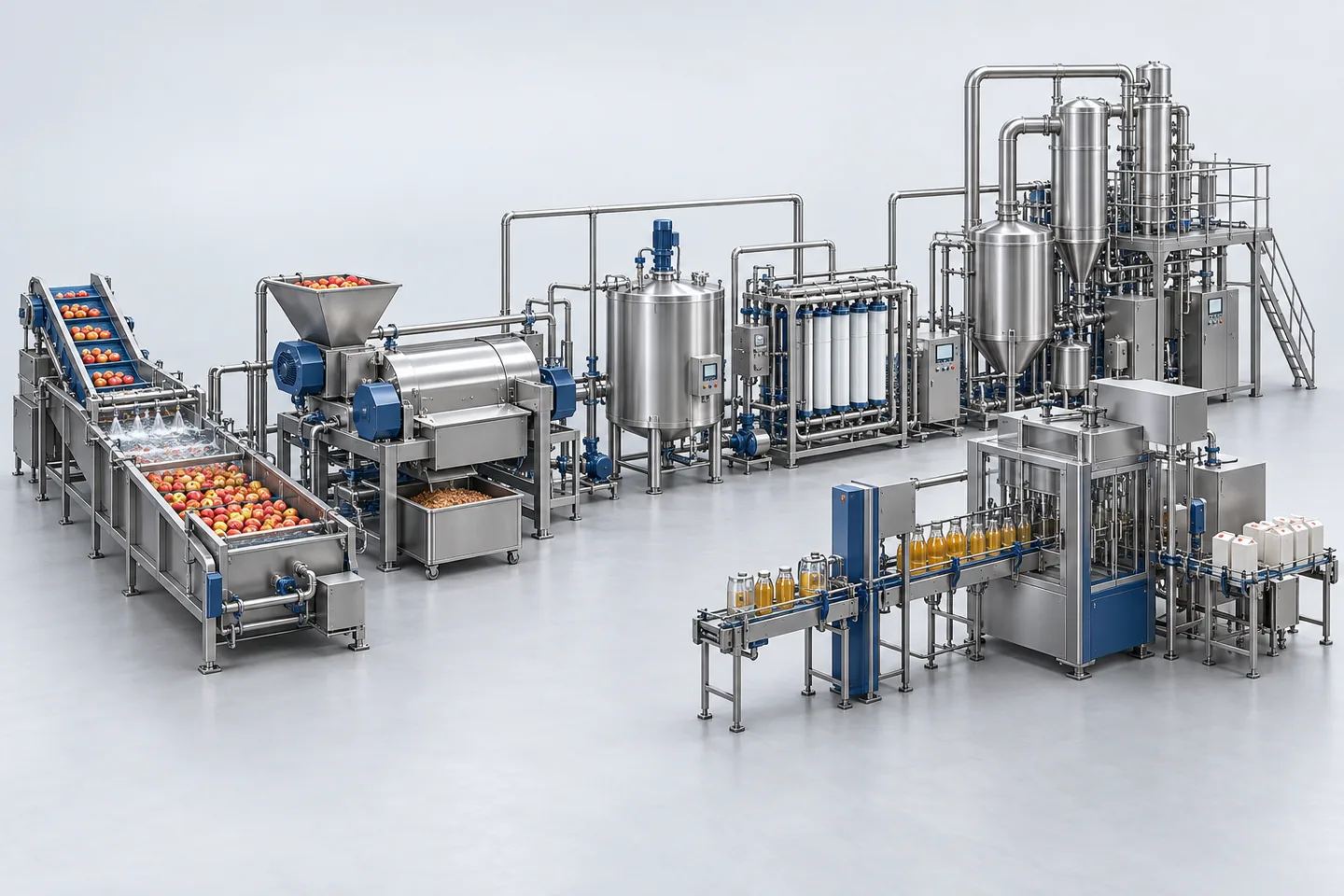
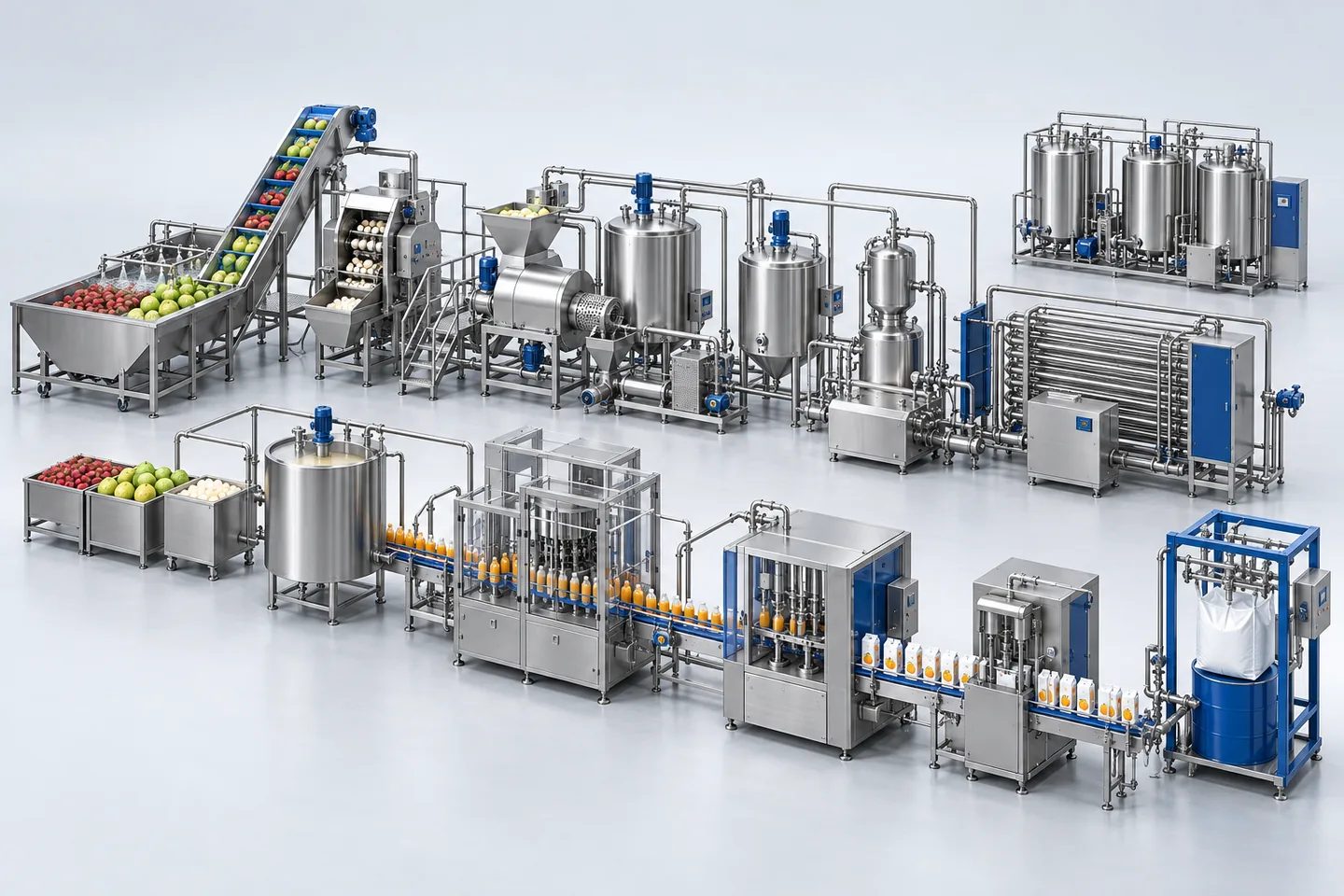
A turnkey plant for litchi and guava juice, nectar and pulp, with de-stoning, pulping, fine finishing, enzymatic treatment, pasteurisation and bottle, carton or aseptic bag filling.
Litchi and guava share a processing challenge — both carry high pectin loads that make juice cloudy, viscous and difficult to filter, and both are intensely seasonal. This line pairs a de-stoner and pulper front end with an enzymatic depectinisation stage that drops viscosity enough for clean filtration and stable clarity, then routes product either to a nectar blending line (sugar, acid, water) for retail bottling, or to an aseptic bag-in-drum station for bulk pulp sale during peak season. Guava additionally needs a fine finisher to remove the hard stone cells that give a gritty mouthfeel.
Who this configuration suits.
Get a detailed quote for the Litchi & Guava Plant.
Layout drawing, utility schedule, BIS / FSSAI checklist, itemised quotation in 24 hours.
Everything we ship with this plant.
Standard turnkey scope. Optional add-ons quoted on request.
Specs at a glance.
| Capacity | 2 – 10 tonnes fruit/hour |
| Products | Clear juice, cloudy juice, nectar, aseptic pulp |
| Litchi yield | 55–65% pulp by fruit weight |
| Guava yield | 65–75% pulp by fruit weight |
| Brix output | 10–14 °Bx nectar, 8–12 °Bx pulp |
| Pack formats | 200ml–1L PET / carton, 220 kg aseptic drums |
| Power load | 90–180 kW |
| Footprint | 6,000–11,000 sq.ft. |
| Manpower | 14–24 per shift |
Price on Request.
Every plant is quoted against your capacity, feedwater analysis, plot and product mix. Send us those and you get an itemised proposal within 24 hours.
Output, degree of automation and whether you need redundancy on critical stations.
A high-TDS, iron-heavy or seasonal input changes the treatment train and its cost materially.
Machinery only, or turnkey with civil drawings, utilities, commissioning and BIS / FSSAI documentation.
Number of SKUs, bottle sizes and how fast you need to switch between them.
Common questions.
Can one line run both litchi and guava?+
Yes, and it makes commercial sense because their seasons only partly overlap. The pulping heads and finisher screens change over, the rest of the train is shared. We size the enzymatic stage for the higher pectin load so neither fruit is compromised.
Should I sell aseptic pulp or finished nectar?+
Most successful plants do both. Aseptic pulp converts a 6-week harvest into a year-round sellable asset and de-risks the season; finished nectar carries the margin. Starting pulp-first and adding retail packing in year two is a common, low-risk path.