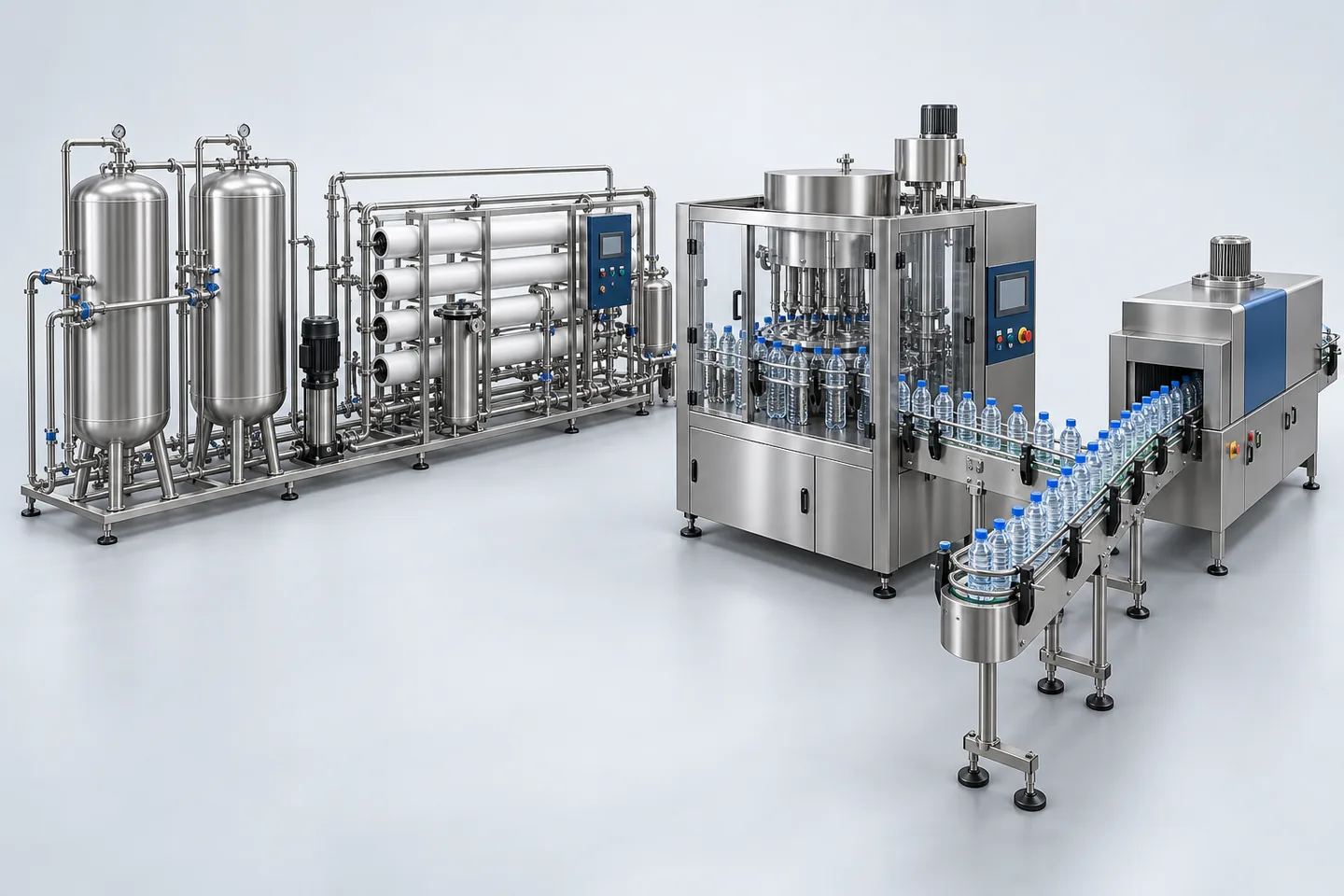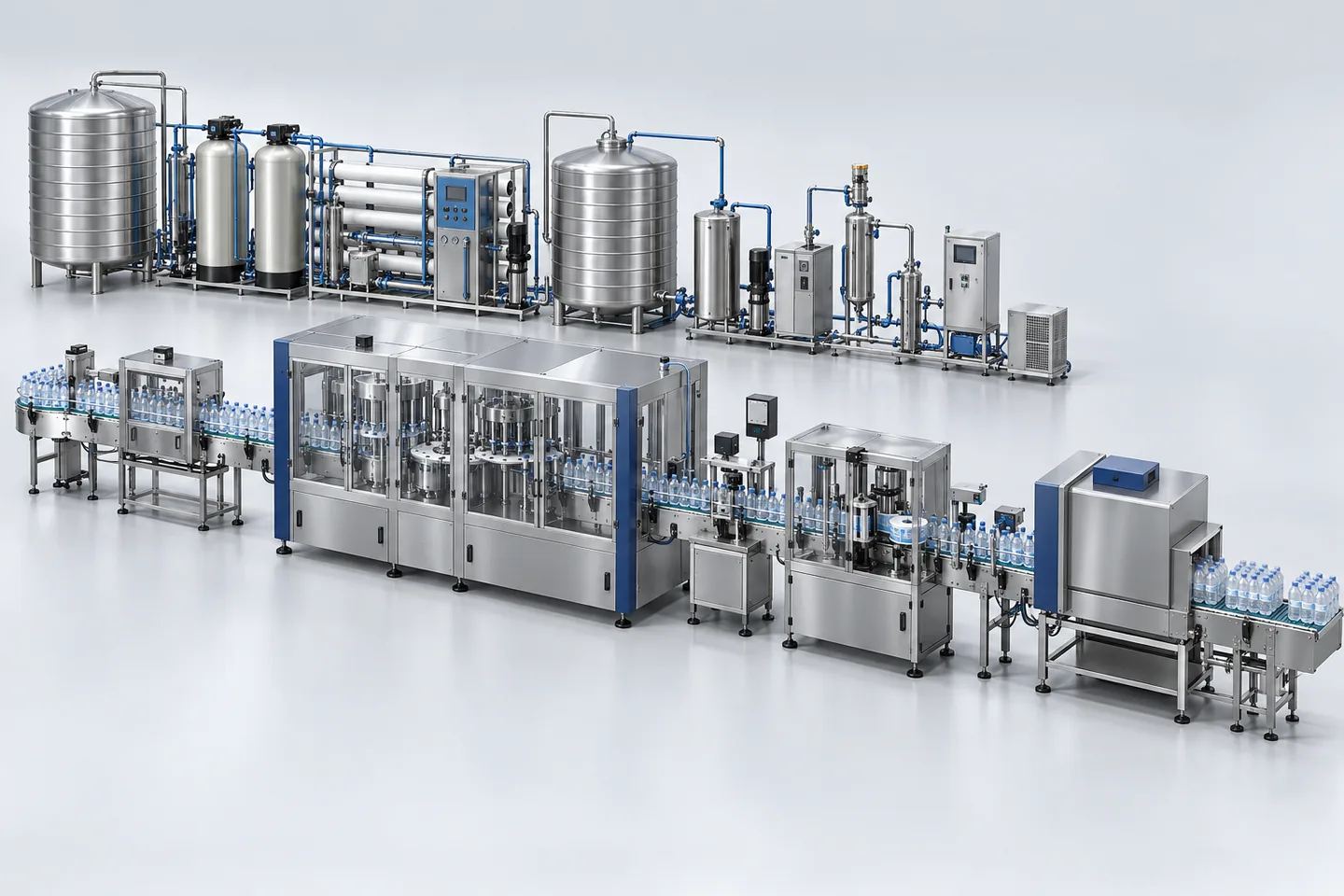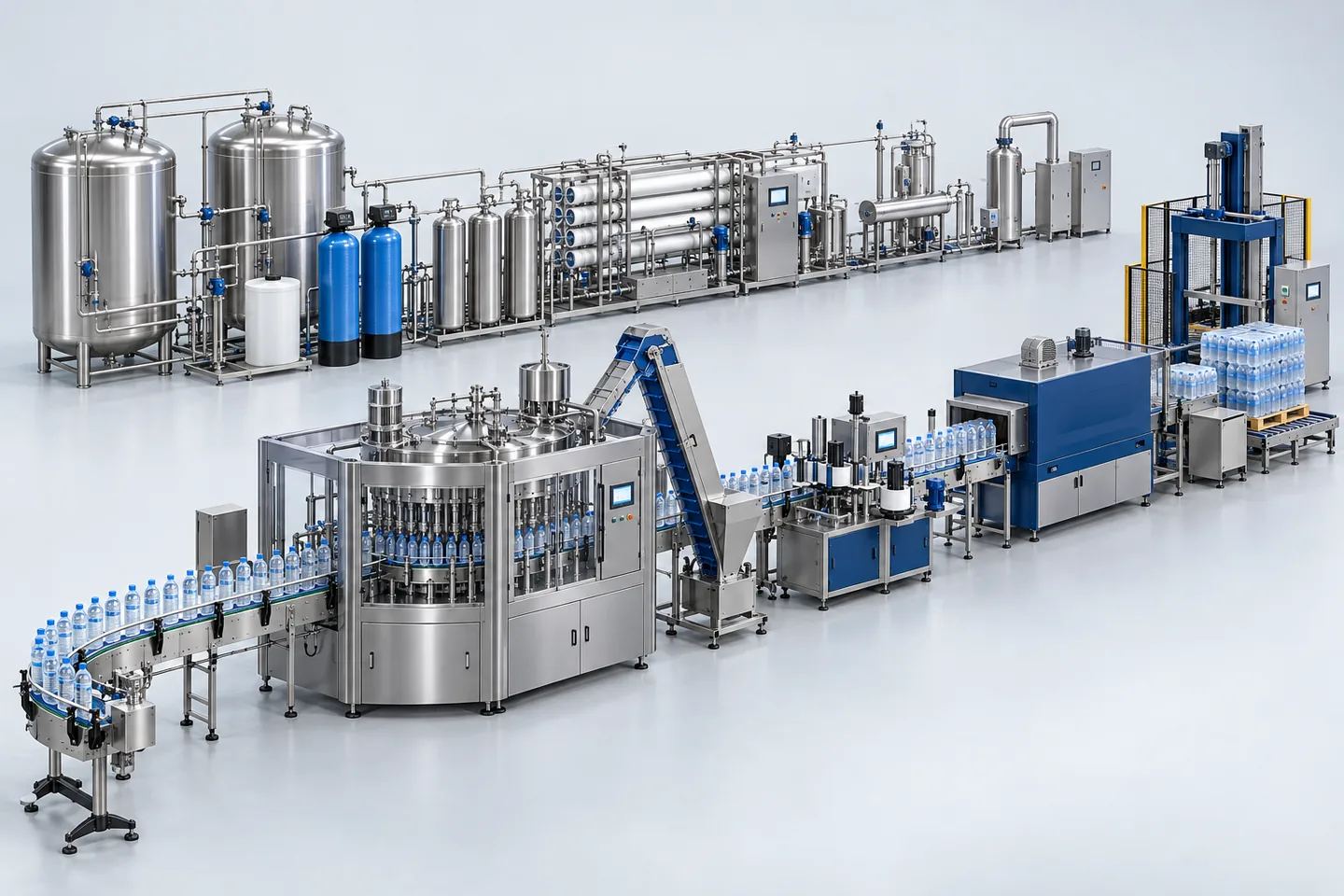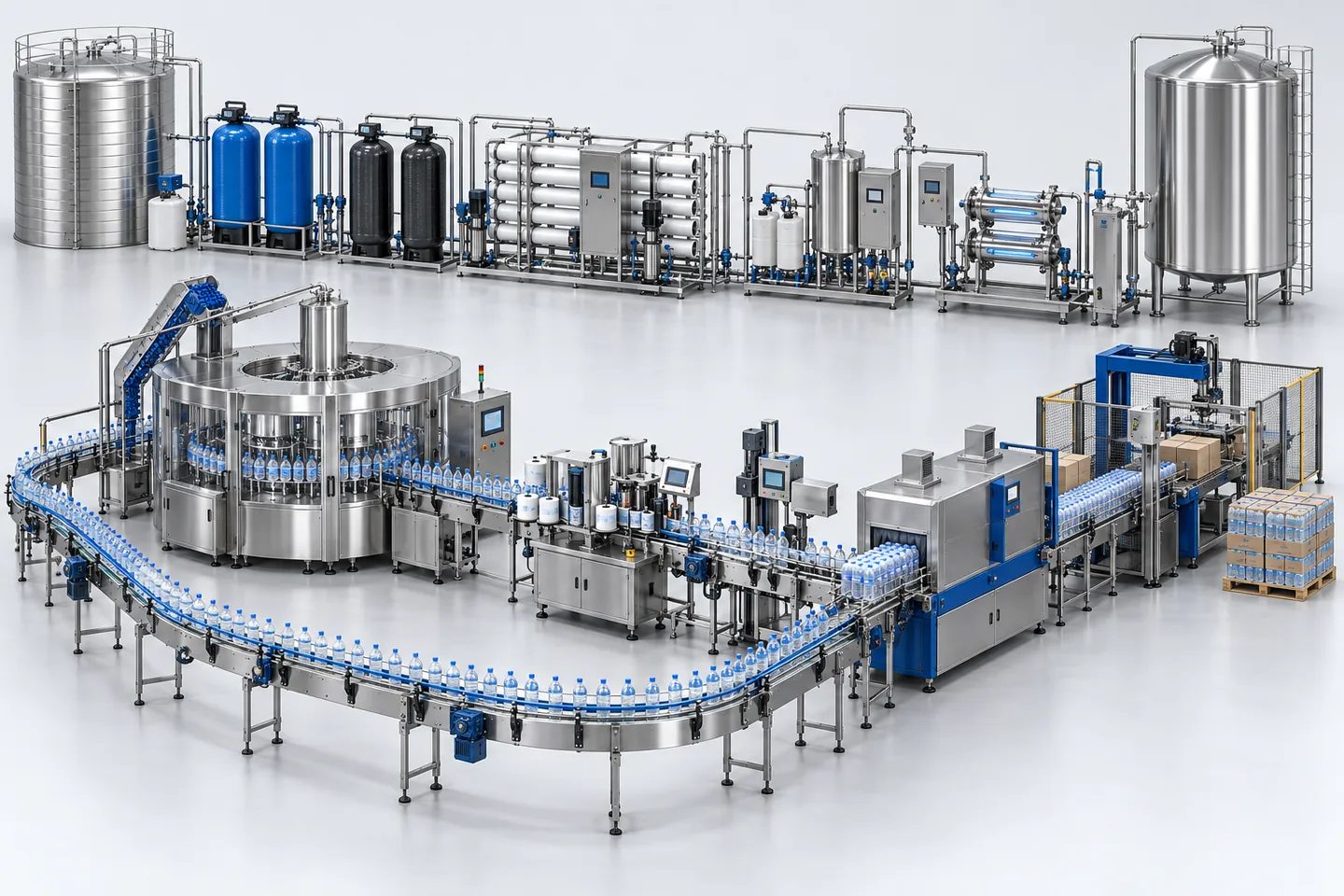
Built for the way your line actually runs.
A 9,000 BPH rotary configuration with a 40-16-10 RFC monoblock, 5000 LPH twin-pass RO and automatic end-of-line packaging. Built for brands supplying modern trade and multi-state distributors.
The 120-to-240 BPM jump is the most expensive step in the packaged water ladder, and many brands stall there. The 150 BPM platform closes that gap: it uses the same rotary monoblock architecture and servo-driven cap feed as our 240 BPM plant, but with a smaller filling carousel and a single ozone train. Practically, it adds roughly 45% output over a 120 BPM line for a much smaller increase in footprint, manpower and utility load. Changeover between 200ml, 500ml, 1L and 2L is under 35 minutes with quick-change star wheels and neck guides.
Who this configuration suits.
Get a detailed quote for the 150 BPM Plant.
Layout drawing, utility schedule, BIS / FSSAI checklist, itemised quotation in 24 hours.
Everything we ship with this plant.
Standard turnkey scope. Optional add-ons quoted on request.
Specs at a glance.
| Output | 150 BPM (9,000 BPH) |
| Bottle sizes | 200ml, 500ml, 1L, 2L PET |
| Filling type | Rotary gravity / pressure |
| Power load | 110–135 kW (3-phase) |
| Water requirement | 9,000 LPH raw water |
| Recovery | 72–80% RO recovery |
| Changeover | 30–35 min between SKUs |
| Footprint | 7,000–9,000 sq.ft. |
| Manpower | 10–12 operators per shift |
| Compliance | BIS IS 14543 / FSSAI / HACCP ready |
What does a 150 bpm plant cost?
A 150 BPM Mineral Water Bottling Plant costs ₹1.4–2.2 crore turnkey in India as an indicative range. Final pricing depends on your feedwater analysis, whether the scope is turnkey or machinery-only, your SKU mix and the utilities already on site.
Indicative market range for a turnkey line, not a quotation. The figure moves with feedwater quality, whether the scope is machinery-only or turnkey, how many SKUs you run and what utilities already exist on site.
Output, degree of automation and whether you need redundancy on critical stations.
A high-TDS, iron-heavy or seasonal input changes the treatment train and its cost materially.
Machinery only, or turnkey with civil drawings, utilities, commissioning and BIS / FSSAI documentation.
Number of SKUs, bottle sizes and how fast you need to switch between them.
Common questions.
Why choose 150 BPM instead of two 90 BPM lines?+
Two lines double your manpower, QC sampling, changeover time and spare inventory. A single 150 BPM line delivers comparable output on one crew. Two lines only win when you need genuinely independent SKUs running simultaneously.
What blowing capacity feeds a 150 BPM filler?+
A 6-cavity rotary blow moulding machine at roughly 9,000–10,500 BPH, or two 4-cavity linear machines if you prefer redundancy. We size the low-pressure and high-pressure compressors together with the blower.